

Last Updated: November 8, 2026
Quick Summary
Expensive hiking gear can be worth it, but only in specific categories and situations, because price and performance do not rise together across the board. Splurge on footwear, rain shells, sleep systems, and backpacking packs, while base layers, camp clothing, and accessories rarely justify the premium markup.
- Premium gear differs from budget mainly in materials, construction, and weight, with branding largely cosmetic.
- A rain shell is a splurge for multi-day trips and a skip for summer day hikes in dry conditions.
- If you use an item fewer than about ten times a year, buy for fit and basic function.
- Used gear, rentals, and end-of-season sales save money without cutting corners on safety.
- A well-fitting budget boot beats an ill-fitting premium one every time.
Table of Contents
- The Real Question: Does Expensive Hiking Gear Make a Difference?
- Budget vs. Expensive Hiking Gear: What Actually Changes
- Hiking Gear Worth Splurging On (And What You Can Skip)
- Cost Per Use: The Math That Changes the Verdict
- Best Hiking Gear for Beginners: Where to Start Without Overspending
- How to Save Money on Hiking Gear Without Sacrificing Safety
- Fit, Accessibility, and Why the Right Gear Beats the Pricey Gear
- Build Your Trail-Ready Wardrobe at Lucky Bear
- Frequently Asked Questions
The Real Question: Does Expensive Hiking Gear Make a Difference?
Yes, expensive hiking gear can make a real difference, but only in specific categories and situations.
This guide breaks down where your money actually buys something on the trail, where it does not, and how to decide for yourself.
The core insight most gear guides miss: expensive hiking gear is not a single decision. It is a dozen small ones, and each deserves its own answer.
Budget vs. Expensive Hiking Gear: What Actually Changes
What changes between budget and premium gear comes down to three things: materials, construction, and weight. Everything else, including branding and colorways, is largely cosmetic. Understanding these differences helps you judge whether a higher price reflects real capability or just positioning.
Materials, Construction, and the Cost of Durability
Higher-priced gear often uses stronger fabrics, better zippers, and reinforced seams. A jacket that holds its waterproofing for several seasons costs more upfront but less per year than one that wets out quickly.
Durability is where budget gear most often falls short. For a closer look at what separates lasting apparel from fast fashion, see our guide on how to tell quality clothing, and if hoodies are on your list, this breakdown of what makes high quality hoodies durable is worth a read.
Weight, Packability, and Comfort Trade-Offs
Lighter gear usually costs more because shedding grams takes better materials and smarter design. For long hikes and backpacking trips, that weight savings adds up over miles. For casual day hikes, the difference is minor and rarely justifies a premium.
Comfort and fit deserve equal weight. A well-fitting budget boot beats an ill-fitting premium one every time. Fit is personal, so try gear on and walk in it before you commit.
Hiking Gear Worth Splurging On (And What You Can Skip)
The splurge-or-skip call depends on two things: what fails when the item fails, and how often you will use it. A category is worth premium money when a failure ends the trip or compromises safety, and when the premium version measurably delays that failure. It is not worth premium money when the cheap version performs nearly the same function and the failure is merely inconvenient.
Splurge: where the money buys real capability
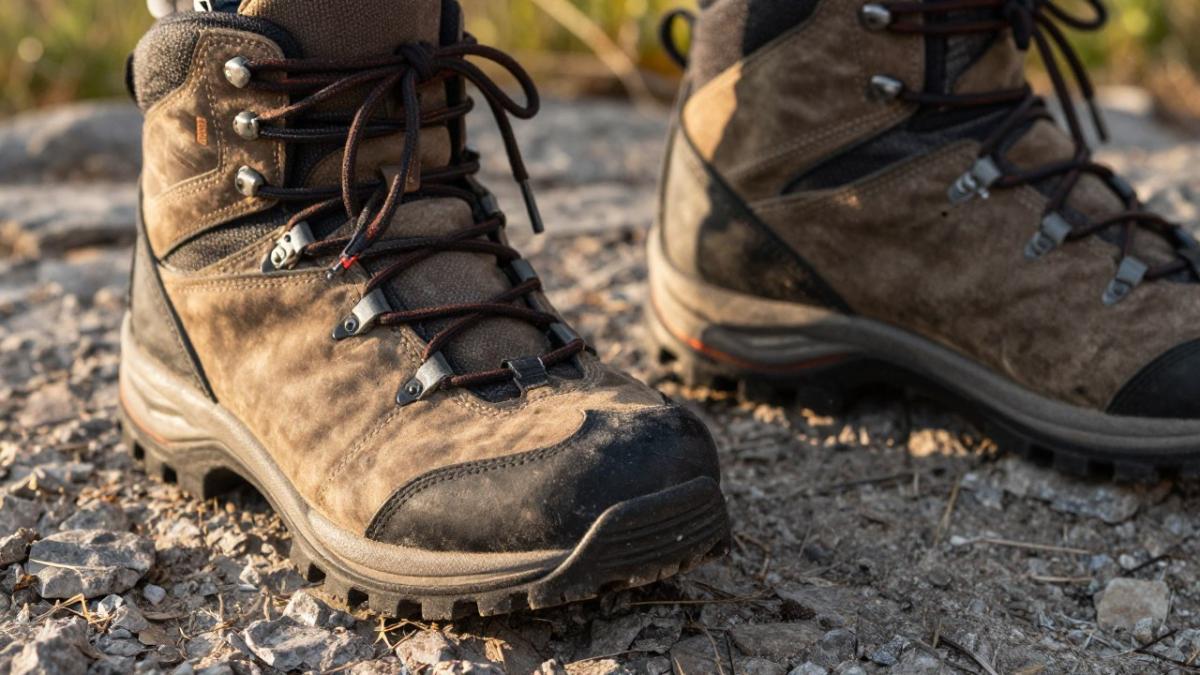
- Footwear. Boots and trail runners are the highest-consequence purchase. Fit, midsole support, and outsole compound determine blister risk, ankle stability, and how many miles you can cover. Premium models tend to use stickier rubber, more durable uppers, and better lasting construction. The trade-off is weight and break-in time; a heavier, stiffer boot is not automatically better for every hiker. Fit still beats price, try on multiple widths and walk in them before buying.
- Rain shell. Waterproof and breathable membranes, seam taping, and durable water repellent (DWR) finishes are where premium shells earn their price. A budget shell may keep rain out initially but wet out faster and breathe poorly, which matters on sustained climbs. For day hikes in mild weather, a basic shell is adequate; for multi-day trips and cold, wet conditions, the premium membrane is a safety and comfort upgrade.
- Sleep system. Warmth rating accuracy, insulation loft retention, and moisture management separate premium bags and pads from budget ones. A pad that loses air or a bag that underperforms its temperature rating ruins sleep and, on cold trips, becomes a safety issue. The trade-off is cost and weight; for summer car camping, a basic synthetic bag is fine.
Skip or buy mid-range: where the premium markup rarely pays
- Base layers. Basic synthetics wick and dry well. Merino adds odor resistance and comfort, which some hikers value, but the performance gap for casual use is small.
- Camp clothing and casual layers. Comfort and fit matter more than technical fabric. A mid-range synthetic or cotton-blend layer performs fine around camp.
- Hiking shorts and tees. Mid-range often wins; the fabric differences are modest and fit dominates. Our hiking shorts brand comparison covers the practical differences, and this guide to moisture-wicking hiking shirts explains what to look for in hot weather.
Scenario matters more than category
The same category can be splurge in one scenario and skip in another. A rain shell is a splurge for a multi-day trip in the Pacific Northwest and a skip for a summer day hike in dry conditions.
| Category | Day hiking | Backpacking | Why |
|---|---|---|---|
| Hiking boots | Splurge | Splurge | Fit, support, and lifespan drive comfort and safety |
| Rain shell | Mid-range | Splurge | Weather protection and breathability matter more on multi-day trips |
| Sleep system | Skip | Splurge | Warmth accuracy and reliability become safety issues |
| Backpack | Skip | Splurge | Load transfer matters above roughly 20 pounds |
| Base layers | Skip | Mid-range | Basic synthetics perform well; merino adds odor resistance |
| Camp clothing | Skip | Skip | Comfort matters more than tech |
| Accessories | Skip | Skip | Little performance gain |
Watch out: the splurge label is not a license to buy the most expensive option in a category. Premium gear that fits poorly or suits a different climate than yours is a worse buy than mid-range gear that fits your trips.
Cost Per Use: The Math That Changes the Verdict
Cost per use is the total cost of owning an item divided by the number of times you actually use it. That sounds simple, but the total cost includes more than the sticker price: it includes how long the item lasts, whether it can be repaired, and what a warranty actually covers.
The formula is straightforward:
Cost per use = (purchase price + expected repair costs − resale value) ÷ total uses over the item's life
Most hikers only run the first half of that equation. The inputs that change the verdict are lifespan and repairability.
Worked examples by category
These examples use round, illustrative prices in USD and conservative lifespan assumptions. Substitute your own trip counts and the math still holds.
- Rain shell. A budget shell at $80 that wets out or delaminates after two seasons and gets replaced twice over six years costs $240 across that period. A $300 shell that holds its waterproofing for six years costs $300, but if it is worn on 30 outings a year, that is about $1.67 per use versus about $1.33 per use for the budget path once replacements are counted. The premium shell wins on cost per use only if it genuinely lasts and you actually hike that often. If you hike five times a year, the budget shell is the better financial call.
- Hiking boots. A $90 boot resoled once for about $50 and worn for four seasons can beat a $220 boot replaced every two seasons, but only if the cheaper boot fits well and the upper holds up. Uppers, not soles, are usually what fail first on budget boots, and uppers are rarely repairable.
- Sleeping pad. A $50 closed-cell foam pad may last a decade with no maintenance; an inflatable pad at $150 to $200 needs care and occasional patch kits. For occasional backpackers, the cheap pad can win on cost per use even though it is heavier and less comfortable.
The inputs that actually move the number
- Trips per year. Count real outings, not aspirational ones. Ten to fifteen day hikes a year is a common casual pattern; thirty-plus is where premium durability starts paying off.
- Expected lifespan. Ask what typically fails first on a given item, zippers, seam tape, foam, uppers, waterproof membranes, and whether that failure is repairable.
- Warranty terms. A lifetime warranty against defects is not the same as coverage for normal wear. The Federal Trade Commission's guidance on warranties explains what those promises actually cover, and it is worth reading before you treat a warranty as a durability guarantee.
Watch out: cost per use flatters premium gear when you assume a long lifespan you have not verified. Base the lifespan input on the failure mode you expect, not on the marketing claim.
A quick decision rule
If an item will be used fewer than about ten times a year, buy for fit and basic function and skip the premium markup unless safety is at stake. If you will use it thirty or more times a year and it is repairable, the premium option often wins on cost per use even at two to three times the price. Between those poles, let fit and the specific failure mode decide.
Best Hiking Gear for Beginners: Where to Start Without Overspending
Beginners should prioritize fit and function over brand names. Buy well-fitting boots, a breathable layer, and a simple rain shell first. Add gear as your trips get longer and your needs become clear.
A common mistake is buying a full premium kit before the first hike. Start with the essentials, rent or borrow the rest, and upgrade only what you use often.
How to Save Money on Hiking Gear Without Sacrificing Safety
Save money through timing, used gear, and rentals, never by cutting corners on safety. End-of-season sales, outlet sections, and previous-year models deliver real discounts on capable gear. Used and rental options stretch a budget further, especially for items you use rarely.
Safety gear is not the place to economize. If you want premium performance without the premium label, this Patagonia alternative guide shows how to find it. The National Park Service hiking safety guidance is a solid reminder of what to never skimp on.
Fit, Accessibility, and Why the Right Gear Beats the Pricey Gear
The right fit beats a higher price tag every time. Gear that rubs, pinches, or restricts movement fails you no matter what it cost. Fit is personal, and it varies by body shape, foot width, and how you move.
Accessibility matters too. Adjustable straps, extended sizes, and easy-on designs make gear usable for more people. When you shop, prioritize how an item feels and functions on your body over its price or logo.
Build Your Trail-Ready Wardrobe at Lucky Bear
The smartest gear strategy is not spending the most. It is spending where it counts and choosing pieces that fit your body and your trips. Lucky Bear offers California-inspired apparel for everyday adventure.
Our hoodies, tees, and athletic wear are designed for beach, mountain, and everyday life.
Spending well on hiking gear starts with knowing which categories earn the upgrade and which do not.
Frequently Asked Questions
Is expensive hiking gear necessary for long hikes?
For long hikes and backpacking trips, spending more on footwear, shelter, and sleep systems usually pays off. These items take the most abuse and directly affect comfort and safety over many hours. Budget options can work for day hikes, but on multi-day trips the weight savings, weather protection, and durability of better hiking gear reduce fatigue and the risk of gear failure far from a trailhead.
What is the 20% rule for backpacking?
The 20% rule is a common guideline that your loaded pack weight should stay at or under about 20% of your body weight. It is not a strict law, but it gives beginners a target for deciding what to carry. Lighter gear helps you stay under that threshold, which is one reason ultralight shelters and sleep systems cost more. Weigh your full pack before a trip and cut unnecessary items first.
Which hiking gear is worth spending more on?
Prioritize hiking boots or shoes, your shelter, and your sleep system. These three categories have the biggest effect on comfort, safety, and how long the product lasts. A well-made jacket with real waterproofing and breathability is also worth the upgrade if you hike in wet or cold conditions. Save money on t-shirts, casual layers, and accessories, where budget options perform well.
How do you choose hiking gear without overspending?
Start with the trips you actually take, not the ones you imagine. Buy for your typical weather, distance, and terrain, then upgrade only when a specific problem shows up on the trail. Compare cost per use rather than sticker price, look at warranties and repair options, and check for used or rental gear before buying new. This approach keeps spending focused on the categories that matter most.
