

Table of Contents
- What Makes a Moisture Wicking Hiking Shirt Actually Work
- The Best Hiking Shirts for Hot Weather: What to Look For
- Merino Wool Hiking Shirts vs. Synthetic: Which Wins on the Trail
- Quick-Dry Hiking Shirts: Drying Times, UPF Ratings, and Ventilation
- Short Sleeve vs. Long Sleeve: Matching the Shirt to Your Conditions
- How to Wash Moisture-Wicking Clothes Without Ruining Them
- Common Mistakes to Avoid When Buying Moisture Wicking Shirts
- Frequently Asked Questions
Last Updated: October 4, 2026
What Makes a Moisture Wicking Hiking Shirt Actually Work
The best moisture wicking hiking shirts move sweat to the fabric's surface, where it evaporates fast, the difference between comfort on a climb and a day of clammy, chafed skin.
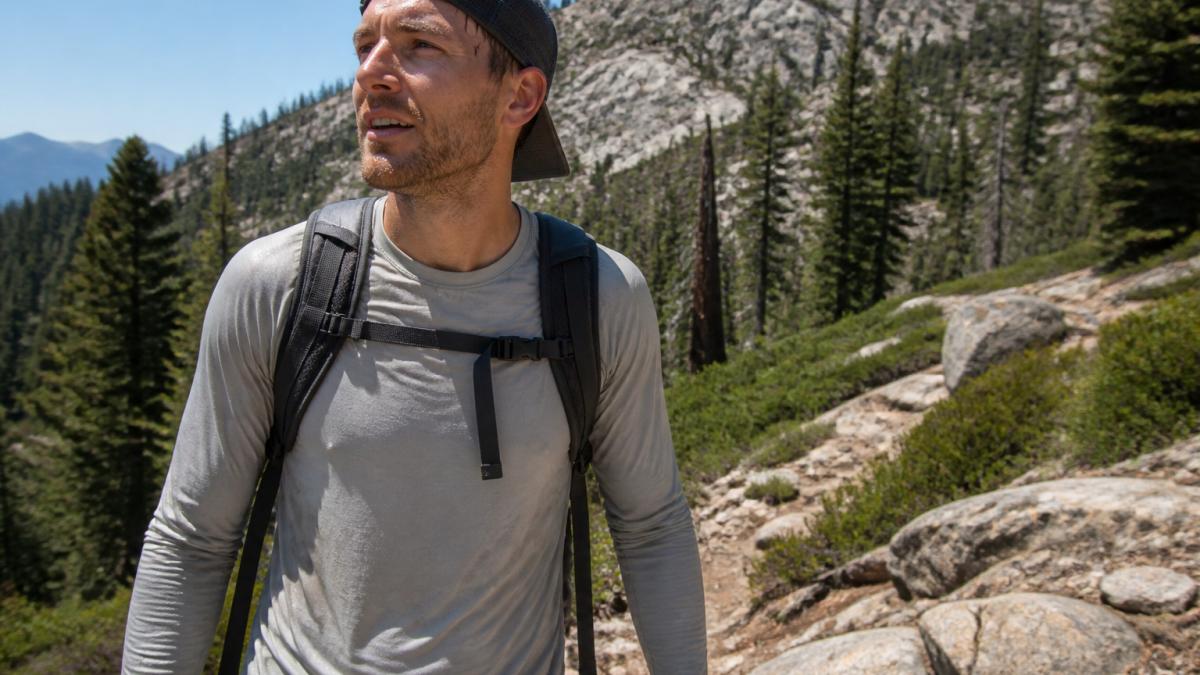
Most buyers shop by brand or color before fabric. The material does the work, not the logo.
REI's expert advice on layering and moisture management explains that wicking fabrics pull perspiration off the skin, while cotton holds it against you.
Moisture wicking transports sweat through a fabric so it dries quickly instead of soaking your skin.
Fabric Weight and Why It Decides Everything
Fabric weight, measured in grams per square meter, sets how a shirt breathes and packs. Lightweight knits under about 150 gsm suit hot weather; midweights around 150-200 gsm handle cooler mornings and shoulder-season hikes.
Most hikers do better with two shirts: a featherweight tee for summer and a midweight long sleeve for exposed ridgelines.
Fit, Layering, and Pack-Strap Friction
Fit affects chafing more than most people expect. A shirt that bunches under pack straps rubs the same spot for miles, turning friction into raw skin fast.
Look for flatlock seams, raglan sleeves, and a hem that stays put. Slightly loose beats skin-tight, because trapped air helps regulate temperature.
The Best Hiking Shirts for Hot Weather: What to Look For
The best moisture wicking hiking shirts for hot weather are lightweight, light-colored, and highly breathable, with UPF sun protection and ventilation. Prioritize polyester or nylon blends over cotton. Heat and humidity are the real test: in dry desert heat, breathability and UPF rating matter most; in humid conditions, quick-drying speed and odor control climb the list.
For brutal summer heat, look for:
- Fabric weight under 150 gsm
- UPF 30 or higher
- Mesh panels or pit vents
- Light colors like white, sand, or pale gray
- A loose cut that lets air move
A beach-day shirt and a desert-climb shirt are not the same garment. Check the fabric weight and UPF label, not the marketing photos.
Merino Wool Hiking Shirts vs. Synthetic: Which Wins on the Trail
Merino wool hiking shirts win on odor control and temperature regulation, while synthetics win on drying speed, durability, and price. Neither is universally better. The right pick depends on how long you're out, how much you sweat, and how often you can wash the shirt.
The useful question isn't "which fabric is best" but "which fabric fails least in my conditions."
How the Three Fabric Families Compare
100% polyester and nylon. These are the workhorses of moisture wicking. The fiber is hydrophobic, so sweat travels along its surface and spreads out to evaporate; thin polyester knits dry fastest.
100% merino wool. Merino's fine fibers (typically around 17-19 microns for next-to-skin garments) absorb moisture vapor into the fiber core rather than holding liquid sweat against your skin, keeping merino comfortable across a wider temperature range and resisting odor.
Blends (merino-synthetic, or synthetic-cotton alternatives). A merino-polyester blend is the common compromise, some odor resistance from the wool, faster drying and better durability from the synthetic.
| Feature | Merino Wool | Synthetic (Polyester/Nylon) | Blend |
|---|---|---|---|
| Drying speed | Slower | Fast | Moderate to fast |
| Odor control | Excellent | Moderate | Good |
| Durability under abrasion | Lower | Higher | Moderate |
| Cost | Higher | Lower | Mid to high |
| Best for | Multi-day trips, cool-to-mild conditions | Day hikes, hot and humid weather | Trips where you want both |
What Changes After Repeated Washing and Long-Term Wear
This is where cheap shirts and good shirts separate.
- Pilling. Merino and wool blends pill where the fabric rubs, under pack straps, at the waist, and along the sides. Synthetics pill less but can snag and pull.
- Wicking performance. A synthetic shirt's wicking comes from the fiber and knit structure, not a coating, so it generally keeps working. What kills it is fabric softener and dryer sheets, which coat the fibers and block moisture transfer.
- Odor control. Merino's odor resistance fades as fibers break down and oils accumulate. Synthetics can develop a permanent smell if bacteria get into the fiber structure and survive repeated washing.
- Seams and collars. Flatlock seams hold up well; stitched seams and glued hems fail first. Collars stretch out on cheap knits, especially if you pull shirts off by the neck.
A practical rule: a well-made synthetic tee outlasts a cheap merino shirt by a wide margin, but a quality merino or blend outlasts a cheap synthetic one. Construction matters as much as fiber.
Matching Fabric to Trip Length and Climate
- Single-day hikes in heat and humidity: synthetic, lightweight, light-colored. Fast drying and breathability matter more than odor control because you'll wash it that night.
- Multi-day backpacking: merino or a merino-synthetic blend. Odor control is the deciding factor when you can't wash for days.
- Cool, wet conditions: synthetic or blend. You want fast drying so a soaked shirt doesn't pull heat from your body.
- Hot, dry desert or high-altitude sun: lightweight synthetic with UPF protection. Merino works too, but it's heavier and slower to dry when you sweat hard.
If you hike a mix of day trips and overnights and want one shirt to cover most of it, a merino-synthetic blend is the safest single choice.
Quick-Dry Hiking Shirts: Drying Times, UPF Ratings, and Ventilation
Quick-dry hiking shirts typically air-dry in one to three hours depending on fabric weight, airflow, and humidity. Thin polyester dries fastest.
Drying time matters because a wet shirt pulls heat from your body, causes chafing, and feels heavy and clingy.
Ventilation does half the work.
Everyday Sunset Lightweight quarter-zip pullover →
UPF ratings tell you how much UV the fabric blocks: UPF 30 blocks roughly 97% of UV rays, UPF 50 about 98%.
Short Sleeve vs. Long Sleeve: Matching the Shirt to Your Conditions
Short-sleeve shirts suit hot, humid, low-exposure trails where airflow beats coverage. Long-sleeve shirts win on high-altitude routes, exposed ridgelines, and anywhere sun or brush is a factor. Many hikers carry one of each.
The old advice to always go short sleeve in summer is outdated. A lightweight long sleeve with UPF protection keeps you cooler on exposed trails than bare arms in direct sun, because the fabric blocks radiant heat and UV while still letting sweat evaporate.
Match the Shirt to Climate and Trip Duration
Hot and humid day hikes (Southeast, Midwest summer). Short sleeve or a button-down with a vented back.
Hot and dry trails (Southwest desert, high plains). Long sleeve with UPF 50.
High-altitude and exposed ridgelines. Long sleeve, UPF 50, light color.
Multi-day backpacking. Merino or a merino-synthetic blend, long or short sleeve depending on sun exposure.
Cool morning starts and shoulder-season hikes. Midweight long sleeve (150-200 gsm) as a base layer under a shell.
Layering and Pack-Strap Friction
Cut and sleeve length affect comfort under a loaded pack more than most buyers expect. Check:
- Shoulder seams. A seam directly under your pack strap will rub for miles. Raglan sleeves move the seam off the shoulder and are safer for backpacking.
- Sleeve length under straps. Long sleeves can bunch at the shoulder if the cut is too loose. A slightly fitted shoulder with a looser body is best.
- Hem length. A hem that rides up under a hip belt exposes your lower back to sun and pack abrasion. Look for a drop hem or a length that stays put when you raise your arms.
- Fabric feel. Smooth, flat knits slide under straps; textured or fuzzy fabrics grab and cause hot spots. Merino is softer but can pill where the strap rubs.
- Layering order. A base layer should sit close but not tight. Trapped air between layers helps regulate temperature, so slightly loose beats skin-tight.
A Simple Packing Rule
For trips with big temperature swings, carry one short-sleeve and one long-sleeve shirt. The weight penalty is small, a lightweight synthetic tee is often under 5 ounces, and the comfort gain is large. Wear the short sleeve on humid, shaded climbs; switch to the long sleeve for exposed sections, high altitude, and camp.
How to Wash Moisture-Wicking Clothes Without Ruining Them
Wash moisture-wicking clothes in cold water on a gentle cycle, skip fabric softener, and air dry when you can. Heat damages elastic fibers, and softener coats the fabric so it stops wicking.
Here's how to wash moisture-wicking clothes so they keep working:
- Turn shirts inside out before washing
- Use cold water and a gentle cycle
- Skip fabric softener and dryer sheets entirely
- Use a small amount of mild detergent
- Air dry, or tumble on low heat only
Performance after repeated washing is where cheap shirts show their age: pilling, stretched collars, and lost wicking. Cold washing and air drying slow all three.
Common Mistakes to Avoid When Buying Moisture Wicking Shirts
The biggest mistake is buying cotton for a sweaty hike. Cotton soaks up sweat, holds it against your skin, and dries slowly, exactly what you don't want on a climb.
Other mistakes to avoid:
- Choosing a shirt by color or logo instead of fabric weight
- Ignoring UPF rating on exposed, high-altitude trails
- Buying skin-tight shirts that chafe under pack straps
- Assuming one shirt handles every season and climate
- Forgetting that fit and layering change with pack weight
The throughline: match the fabric to the conditions, not to the photo on the product page.
At Lucky Bear, our Everyday Sunset Lightweight quarter-zip pullover is built for exactly this kind of layering.

Frequently Asked Questions
What's the difference between Dri-FIT and moisture-wicking?
Dri-FIT is a brand-specific name for a fabric that moves sweat away from your skin. Moisture-wicking is the general term for that same function. Any shirt labeled moisture-wicking does the same core job: it pulls sweat to the outer surface where it evaporates faster. The difference comes down to fabric blend and construction. Polyester and nylon blends dry fastest, merino wool regulates temperature and controls odor, and cotton absorbs sweat and stays wet, which is why it is a poor choice for hiking.
Is merino wool or synthetic fabric better for hiking shirts?
It depends on your conditions. Merino wool hiking shirts handle odor better across multiple days and feel comfortable in cool to mild weather. Synthetic fabrics like polyester dry faster, weigh less, and cost less, which makes them the better pick for hot weather and high-sweat hikes. Many hikers keep one of each: merino for cool-weather backpacking trips and synthetic quick-dry shirts for summer day hikes. Fabric blend matters too, since a wool-polyester mix can split the difference.
How should a moisture wicking hiking shirt fit?
It should sit close to your skin without restricting movement. A snug fit lets the fabric pull sweat away efficiently, while a loose shirt traps heat and bunches under backpack straps. Check that the shoulders allow a full arm swing and the hem stays put when you raise your arms. If you plan to layer, size so a base layer fits underneath without squeezing. Lucky Bear's Everyday Sunset quarter-zip pullover uses a regular fit with a cadet collar, which layers cleanly under a shell.
How do you wash a moisture-wicking hiking shirt?
Turn it inside out, use cold water on a gentle cycle, and skip fabric softener, which coats the fibers and blocks wicking. Wash with similar synthetic fabrics and avoid heavy cotton items that shed lint. Air dry when you can, or use low heat. High heat breaks down the fabric's wicking treatment over time. For odor control, wash after every hike or two, and let the shirt dry fully before packing it away.
Picking the right shirt for real heat, real mileage, and real pack straps takes more thought than the average buyer gives it. Lucky Bear builds California-inspired apparel for beaches, mountains, and everything in between, from moisture-wicking pullovers to the Sierra Collection. Our gear is made to order, which cuts overproduction, and our Everyday Sunset quarter-zip layers cleanly from trail to town. Add to cart and find your next trail shirt.