

Last Updated: November 2, 2026
Quick Summary
The best brands for hiking shorts combine moisture-wicking fabric, four-way stretch, and construction that survives brush and rock. Lucky Bear's recycled athletic shorts meet these criteria at $35.00, with a 91% recycled polyester and 9% spandex blend, UPF50+ protection, and sizing from 2XS to 3XL.
- Look for a synthetic blend with spandex woven in rather than added as a stretch panel.
- For hot and humid hikes, choose fabric in the 3 to 5 oz/yd² range with a DWR finish.
- Lucky Bear's shorts have a 6.5-inch inseam, elastic drawstring waistband, and mesh side pockets.
- Wash cold, skip fabric softener, air dry, and patch abrasion early to extend lifespan.
- A lightweight synthetic short commonly lasts two to four seasons of frequent use.
Table of Contents
- What Separates the Best Brands for Hiking Shorts
- How to Choose Hiking Shorts for Your Trail Conditions
- The Best Hiking Shorts for Men: What to Look For
- The Best Hiking Shorts for Women: Fit and Features That Matter
- Hiking Shorts for Backpacking: Weight, Pockets, and Durability
- A Brand Comparison: How Lucky Bear Stacks Up for Hiking
- Care and Long-Term Ownership of Your Hiking Shorts
- Finding Your Next Pair of Hiking Shorts at Lucky Bear
- Frequently Asked Questions
What Separates the Best Brands for Hiking Shorts
The best brands for hiking shorts get three things right at once: fabric that moves sweat away from skin, a cut that stays put on steep ground, and construction that survives brush and rock. Below, we break down the criteria that actually separate a good pair from a great one, then compare what to look for across men's and women's fits.
Fabric is where most shopping decisions get made, and it's also where most buyers get misled. A short can feel light in the fitting room and turn clammy twenty minutes into a climb.
Fabric, Stretch, and Breathability
Look for a synthetic blend with spandex woven in, not just added as a stretch panel. Four-way stretch matters more than two-way because hiking involves lateral movement, stepping over logs and scrambling across talus.
Breathability is the spec shoppers overlook. A dense, tightly woven short traps heat on exposed ridgelines. Lighter fabric weights release heat faster, which is why thru-hikers gravitate toward thin, quick-drying shells over padded options.
If you're building a hot-weather kit, our guide to the best hiking apparel for extreme heat goes deeper on breathable layers. Pair that with a moisture wicking hiking shirt and you've handled the two pieces that decide whether a summer hike feels manageable or miserable.
Fit, Sizing, and Inseam Length
Inseam is the number that determines whether a short works for you. Shorter inseams suit fast-and-light day hiking; longer ones appeal to trail-to-town wear.
Waistbands deserve equal scrutiny.
Sizing runs differently across brands, so measure your waist and hips rather than trusting a label. Sizing runs from 2XS through 3XL on our men's recycled athletic shorts.
How to Choose Hiking Shorts for Your Trail Conditions
Match the short to the trail, not to the photo on the product page. The single most useful way to do that is to sort conditions into four buckets, hot and humid, hot and dry, wet and rainy, and cool shoulder season, and then pick fabric weight, inseam, and features for each. Most shoppers skip this step and buy one pair for everything, which is why so many hiking shorts end up either too clammy in summer or too flimsy in fall.
Hot and humid conditions
Humidity is the hardest test for any short because sweat can't evaporate as fast. Look for the lightest fabric weight you can find, commonly in the 3 to 5 oz/yd² range for woven hiking shorts, with a high synthetic content and a durable water repellent (DWR) finish that helps the fabric shed mist and light rain without trapping heat.
Hot and dry conditions
Desert and exposed ridge hikes reward UPF-rated fabric and light colorways that reflect rather than absorb heat. UPF50+ protection on our men's recycled athletic shorts covers long exposed miles. If you hike in direct sun for hours, pair the short with a moisture wicking hiking shirt so the two pieces work together rather than against each other.
Wet and rainy conditions
In sustained rain, drying speed beats waterproofing for shorts. Fully waterproof shorts trap sweat and feel clammy on climbs, so most experienced hikers choose a fast-drying synthetic shell and accept that it will get wet. The practical test is simple: soak the short, wring it once, and see how long it takes to feel dry against skin.
Cool shoulder-season conditions
When temperatures drop, the trade-off flips. Some hikers add a lightweight liner or wear a base layer underneath rather than buying a separate cold-weather short. If you run cold, a longer cut plus a liner is usually more versatile than a single heavy short.
Match the short to your actual mileage
Climate sets the fabric; your typical day sets the features. A two-hour local loop and a ten-hour summit push have different demands on pockets, waistband security, and chafe resistance. The best hiking shorts for women and men alike are the ones that match your real mileage, not an aspirational version of it. If you hike mostly in one climate, buy for that climate first and treat everything else as a secondary pair.
The Best Hiking Shorts for Men: What to Look For
Men's hiking shorts should prioritize range of motion, pocket security, and a waistband that stays put under a pack belt. Four-way stretch fabric, a drawstring waist, and mesh pockets that drain water cover the essentials.
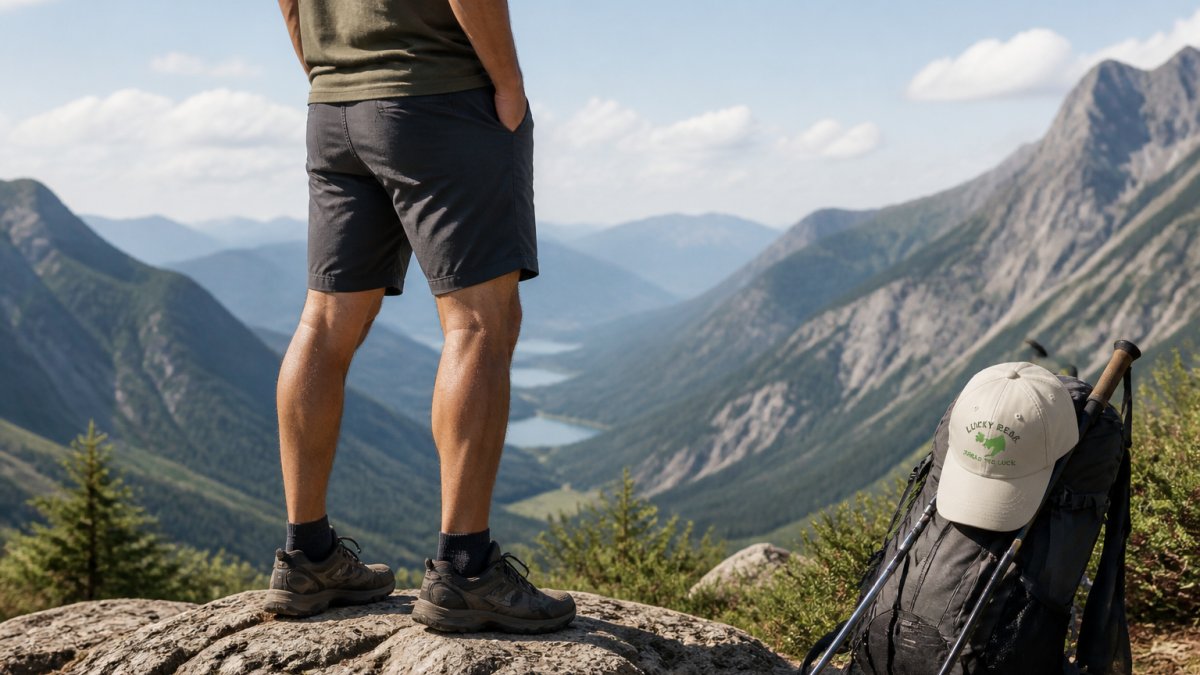
Our men's recycled athletic shorts use a 91% recycled polyester and 9% spandex blend with four-way stretch, moisture-wicking and fast-drying material, and UPF50+ protection.
These shorts have no inner lining.
The Best Hiking Shorts for Women: Fit and Features That Matter
Women's hiking shorts live or die on waistband fit and rise.
Inclusive sizing matters here more than marketing copy suggests. A brand that runs from 2XS to 3XL gives more hikers a genuine fit rather than a compromise.
Fabric expectations are the same as men's: stretch, breathability, quick-drying performance. The difference is in cut and rise, so try before a big trip rather than on one.
Black Retro Sunset Men's Recycled Athletic Shorts →
Hiking Shorts for Backpacking: Weight, Pockets, and Durability
Backpacking shorts trade features for weight and reliability.
Pocket storage deserves real attention. If pocket capacity is your priority, our picks for activewear with deep functional pockets cover that ground.
For thru-hiking and fast-and-light trips, fewer seams and lighter fabric reduce chafe and pack weight. For weekend backpacking, a slightly more durable short pays off over seasons of use.
A Brand Comparison: How Lucky Bear Stacks Up for Hiking
Comparing hiking shorts brands comes down to fabric spec, fit range, and price transparency. For a closer look at how Lucky Bear positions itself against a known outdoor brand, see this Patagonia alternative for outdoor enthusiasts.
Our recycled athletic shorts are priced at $35.00.
Best for: day hikers, surf-to-trail wearers, and backpackers who want a light, stretchy, sun-protected short at a clear price. Skip if: you need an integrated compression liner or a women's-specific cut.
Here are the key facts Lucky Bear states about its recycled athletic shorts.
| Spec | Value |
|---|---|
| Price | $35.00 |
| Fabric blend | 91% recycled polyester, 9% spandex |
| Stretch | Four-way |
| Sun protection | UPF50+ |
| Inseam | 6.5 inches |
| Waistband | Elastic with flat white drawstring |
| Pockets | Mesh side pockets |
| Sizing range | 2XS through 3XL |
Care and Long-Term Ownership of Your Hiking Shorts
Most hiking-short roundups stop at the purchase. That's a gap worth closing, because how you wash, repair, and retire a pair of shorts determines its real cost per hike far more than the sticker price does. A $35.00 short that lasts four seasons is cheaper per mile than a $90.00 short that delaminates in one.
Washing without wrecking the fabric
Cold water, mild detergent, and air drying preserve stretch fibers and moisture-wicking performance.
DWR finishes need occasional refresh. When water stops beading and starts soaking in, wash the shorts per the care label and apply a spray-on or wash-in DWR product made for synthetic fabrics. This restores rain-shedding for a fraction of the cost of a new pair.
Repairing the common failure points
The three places hiking shorts fail first are the hip-belt abrasion zone, the crotch seam, and the drawstring or waistband. Each has a straightforward fix:
- Hip-belt abrasion: a small patch of tenacious tape or a sewn-on nylon patch handles most wear before it becomes a hole. Apply it early, when the fabric looks fuzzy rather than torn.
- Crotch seam: a reinforced stitch or a gusset patch extends life significantly, especially on stretch fabrics that see repeated tension on steep steps.
- Drawstring and waistband: replacing a drawstring is a five-minute fix; a stretched elastic waistband is harder and often signals it's time to retire the pair.
Treat shorts as gear you maintain, not disposable clothing, and the cost per hike drops fast. A single repair that adds a season of use typically pays for itself many times over compared with replacing the short.
Expected lifespan and when to retire a pair
There's no universal number, but a common pattern among regular hikers is two to four seasons of frequent use for a lightweight synthetic short, longer for a heavier abrasion-resistant pair used mainly on maintained trails. Signs it's time to retire: thin, see-through fabric at the seat or thigh, a waistband that no longer holds without a belt, or seams that keep failing after repair. Retiring a pair isn't failure, it's the end of a useful life, and it's the right moment to check whether your next pair should be a different fabric weight or inseam for the conditions you actually hike.
Total cost of ownership
Price transparency matters more than a single low number. Compare shorts on cost per season of use, not just purchase price: a $35.00 pair that lasts three seasons costs less per season than a $60.00 pair that lasts two. Factor in whether the brand sells replacement drawstrings, offers repairs, and discloses fabric content and recycled content, all signals of whether the short is built to be maintained or replaced.
Finding Your Next Pair of Hiking Shorts at Lucky Bear
Choosing among the best brands for hiking shorts gets simpler once you know your trail conditions, inseam preference, and whether you need a liner.
You can shop the navy men's recycled athletic shorts directly, or browse the full range in black, May gray, and retro sunset colorways. Each pair uses the same 91% recycled polyester and 9% spandex build with a 6.5-inch inseam and drawstring waist.

Frequently Asked Questions
What is a good brand of hiking shorts?
A good brand for hiking shorts balances fabric, fit, and value. Look for four-way stretch materials like recycled polyester and spandex, which move with you on the trail. Lucky Bear's men's recycled athletic shorts, for example, use a 91% recycled polyester and 9% spandex blend with moisture-wicking and UPF50+ protection. Check for an inseam that suits your height and activities, plus pockets that actually hold your essentials. Brands that publish clear sizing charts and fabric specs are usually more reliable.
Are hiking shorts different from regular athletic shorts?
Hiking shorts often prioritize durability, pocket security, and moisture management over pure stretch. Athletic shorts like Lucky Bear's recycled pair work well for day hikes because they dry fast and have four-way stretch, but they have no inner lining. For backpacking, look for abrasion resistance and a waistband that won't dig in under a hip belt. Regular gym shorts can work for easy trails, but purpose-built hiking shorts tend to last longer under rough conditions.
Should hiking shorts be tight or loose?
Most hikers prefer a relaxed fit that allows full range of motion without excess fabric that can snag on branches. Lucky Bear's athletic shorts have an elastic waistband with a drawstring. Too tight and you'll get chafing on long climbs; too baggy and you risk bunching under a backpack. Try your normal waist size and check that you can squat and step high without the fabric pulling.
How do you choose hiking shorts for hot weather?
For hot weather, prioritize breathability, quick-drying fabric, and sun protection. Lucky Bear's recycled athletic shorts are made from a lightweight 5.13 oz/yd² microfiber that wicks moisture and dries fast, with UPF50+ protection for exposed trails. Look for mesh side pockets for ventilation and a fabric weight under 6 oz/yd². Avoid heavy cotton blends that hold sweat and take hours to dry.
The hardest part of gear shopping is trusting a newer label over a familiar one. We'd rather earn that trust with a clear spec sheet and an honest list of what our shorts do and don't include. Lucky Bear builds California-inspired apparel for beaches, mountains, and everything between, with recycled fabric, UPF50+ protection, and sizing from 2XS to 3XL. Get started with Lucky Bear and find a pair of hiking shorts that works as hard on the trail as it looks on the street.
