
Last Updated: October 23, 2026
Quick Summary
You can tell quality clothing by checking seven points: fiber label, fabric weight and density, weave or knit, seams and stitching, hardware and finishing, fit and cut, and wear signs like pilling. Turn the garment inside out first, since seams and stitching are the fastest read on construction quality. A well-made piece has tight, even stitches and flat seams that will not pull apart.
- Pull gently on a seam in both directions; daylight through the stitches means it is too loose.
- The fiber label is the most useful tag because it predicts how fabric wears, washes, and holds color.
- Hold fabric to a window; if light pours through, it is thin and will pill and snag fast.
- A zipper that snags on day one will fail within months, so test hardware before buying.
- Rub two fabric layers together for ten seconds; fast fuzz balls mean the garment will pill.
Table of Contents
- Start With a Clothing Quality Checklist
- How to Check Clothing Seams and Stitching
- Read the Fiber Label: Natural and Synthetic Fibers
- Best Fabrics for Durable Clothing
- Assess Fabric Weight, Density, and Weave
- Inspect Hardware, Linings, and Finishing
- Check Fit, Cut, and Shape Retention
- At-Home Wash and Wear Tests Before You Commit
- Frequently Asked Questions
Start With a Clothing Quality Checklist
You can learn how to tell quality clothing in about five minutes per garment. The trick is knowing where to look. At Lucky Bear, we build tees and hoodies for people who live outside, so we care about this a lot. Cheap clothes fail in predictable places, and once you know the seven spots to check, you will spot a weak garment before you ever try it on.

Clothing quality is the sum of the materials, construction, and finishing that decide how long a piece lasts and how well it keeps its shape. It shows up in the seams, the fiber label, the fabric weight, and the hardware.
The Seven-Point Inspection
Run this list on every item you pick up:
- Fiber label: what the fabric is made of
- Fabric weight and density: how substantial it feels
- Weave or knit: how the yarn is built
- Seams and stitching: the inside of the garment
- Hardware and finishing: buttons, zippers, linings
- Fit and cut: how it hangs on a body
- Wear signs: pilling, snags, loose threads
| Check | What to Look For | Red Flag |
|---|---|---|
| Fiber label | Named fibers with percentages | Vague "blend" wording |
| Fabric weight | Dense, opaque hand feel | Thin, see-through |
| Seams | Flat, tight, even stitching | Wavy, loose, single-thread |
| Hardware | Smooth, branded, sturdy | Wobbly, sharp, plastic |
| Fit | Clean drape, holds shape | Pulls or bags out |
| Wear signs | Smooth surface | Pilling, snags, loose threads |
A common mistake is judging by the outside only. The inside tells the truth.
How to Check Clothing Seams and Stitching
Turn the garment inside out before anything else. Seams and stitching are the fastest read on construction quality. A well-made piece has tight, even stitches and flat seams that will not pull apart.
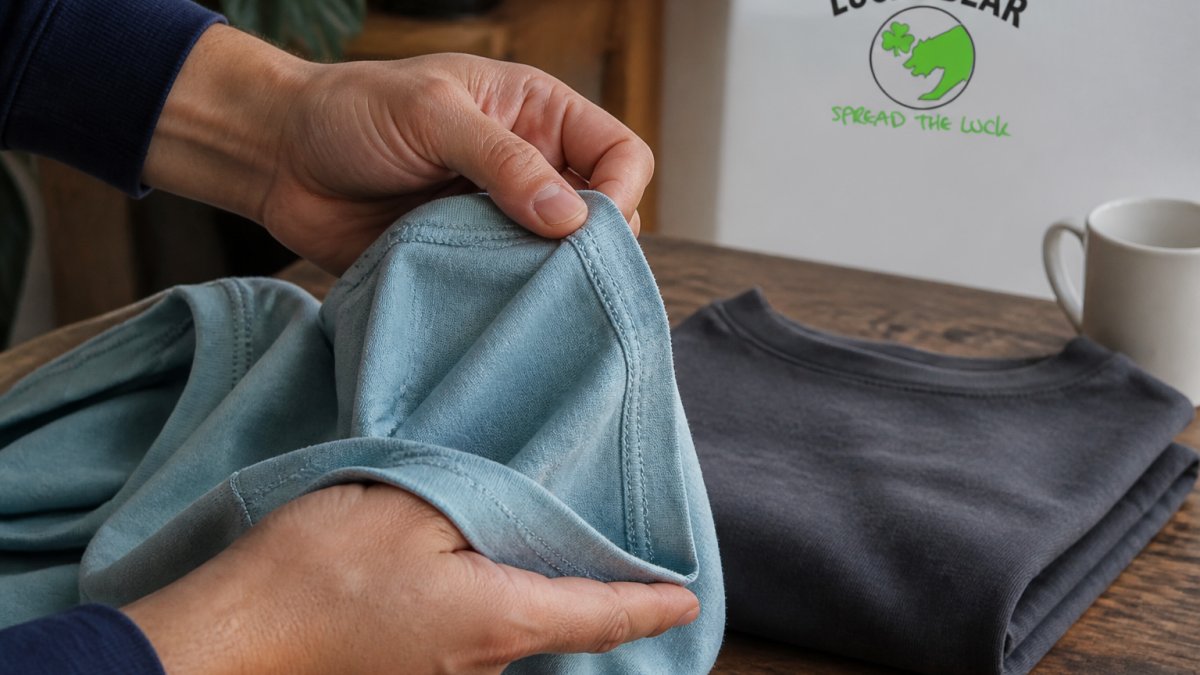
Look for a seam allowance, which is the extra fabric beyond the stitch line. A generous allowance gives the seam room to hold. Single-stitched side seams on a stretchy fabric are a warning sign.
Stitch Density and Seam Allowance
Stitch density is the number of stitches per inch. More stitches per inch means a stronger seam. Hold the seam up to the light and count. If you can see wide gaps between stitches, the seam will fail early.
Seam allowance is the fabric margin past the stitching. Too little margin and the seam frays. Check these spots:
- Shoulder seams: should be taped or double-stitched
- Side seams: should be flat and even
- Hems: double-folded, not raw
Read the Fiber Label: Natural and Synthetic Fibers
The fiber label is the single most useful tag on a garment.
Natural fibers come from plants or animals. Synthetic fibers are made from chemicals. Neither is automatically better. The right choice depends on the garment and how you will use it.
| Fiber | Strength | Weakness | Best For |
|---|---|---|---|
| Cotton | Breathable, soft | Shrinks, wrinkles | Everyday tees |
| Wool | Warm, odor-resistant | Needs care | Cool weather |
| Linen | Cool, strong | Wrinkles easily | Hot days |
| Silk | Smooth, light | Delicate | Dress wear |
| Polyester | Durable, cheap | Traps heat | Activewear blends |
Fiber content affects shrinkage, colorfastness, and pilling. Our Lucky Breaks T-shirt is 100% cotton at 5.0-5.3 oz/yd², a weight that resists the see-through problem cheap tees have.

Best Fabrics for Durable Clothing
Durable clothing starts with fabric that can take wear, but "durable" means something different for each fiber. A cotton tee and a wool coat fail in different ways, so a single checklist cannot judge both.
The Federal Trade Commission's textile rules require accurate fiber and care labels on clothing sold in the U.S., so the tag is a legal document, not marketing.
Fiber-Specific Quality Checks
Each fiber fails differently. Check the right thing for the fabric in your hands:
- Cotton: stretch it across the grain and release. Good cotton springs back within a second or two; poor cotton stays baggy or ripples. Look for even yarn thickness and no thin, see-through spots when held to a window. A dense single jersey at roughly 5 oz/yd² or heavier resists the see-through problem common in cheap tees.
- Wool: squeeze a fold and release. It should recover its shape, not stay creased. Rub the surface against itself; excessive fuzzing means short fibers that will pill. Look for even twist in the yarn and no scratchy, brittle fibers poking out. Merino should feel soft against the neck, not prickly.
- Linen: small slubs are normal and part of the character. Big weak patches, thin spots, or a stiff, papery hand are not. Crumple a corner and release; good linen creases sharply and relaxes, while poor linen stays crushed or feels brittle.
Assess Fabric Weight, Density, and Weave
Fabric weight and density decide how a garment feels and how long it lasts. Heavier fabric resists wear and holds shape. Dense fabric blocks light and wind. Loosely woven fabric pills and snags fast.
Hold fabric up to a window. If light pours through, it is thin. Our 3/4 sleeve Lucky Bear Baseball Shirt uses a fine knit jersey at 4.5 oz/yd², prewashed to limit shrinkage.
Inspect Hardware, Linings, and Finishing
Hardware and finishing are where cheap garments cut corners first. Buttons, zippers, and linings take daily stress, so weak parts fail early. Good finishing means clean edges, even hems, and hardware that feels solid.
Check these details:
- Buttons: stitched tight, no loose thread
- Buttonholes: clean, no frayed edges
- Zippers: smooth glide, no catching
- Linings: attached flat, no bunching
A zipper that snags on day one will fail within months. A button sewn with a single thread loop will pop off in the wash.
Check Fit, Cut, and Shape Retention
Fit and cut tell you how a garment will look after ten washes. A good cut drapes cleanly and holds its shape. A poor cut pulls at the shoulders or bags at the knees.
Shape retention is the garment's ability to keep its original form. Stretch recovery is part of this: stretch the fabric and let go. It should snap back, not sag.
Try these moves in the fitting room:
- Raise your arms: does the hem ride up?
- Sit down: does the waistband dig or gap?
- Twist your torso: does the fabric pull tight?
If it fails any of these, it will fail worse after washing. Our Green Luck Men's classic tee is cut to sit nicely and hold sharp lines, which is what shape retention looks like in practice.
At-Home Wash and Wear Tests Before You Commit
The real test happens after the first wash. Many garments look fine on the rack and fall apart in the laundry. A simple at-home test tells you whether a piece will last, and it is the step most shoppers skip. Run these tests on a new item before you commit to keeping it, and repeat them after the first wash to see how the garment actually behaves.
Shrinkage Test
Measure the garment before washing: lay it flat and record the chest width, body length, and sleeve length with a tape measure. Wash according to the care label, then air dry and measure again. Most cotton knits shrink a little on the first wash; a common pattern is 2-5% length shrinkage in untreated cotton. Prewashed cotton, like the fine knit jersey in our 3/4 sleeve Lucky Bear Baseball Shirt, is washed before cutting to limit this.
Colorfastness Test
Before washing the whole garment, rub a damp white cloth on an inside seam or hem. If color transfers to the cloth, the dye is not set and will fade fast. Then wash the item alone the first time and check the water; if it tints, the dye is bleeding. Dark denim and saturated colors are the usual offenders. A garment that passes both checks will hold color through normal washing.
Pilling Test
Rub two layers of the fabric together briskly for about ten seconds, or rub the surface with a soft brush. If fuzz balls form quickly, the fibers are short and loose and the garment will pill across the chest and underarms. Wool, cashmere blends, and loose knits are the most prone. A tight knit with longer, twisted fibers resists pilling.
Shape Retention Test
Stretch the fabric across the grain and release. It should snap back within a second or two. Then wash and air dry, and check the shoulders, elbows, and knees for bagging. A garment that sags after one wash will sag worse after ten. This is where cost per wear matters: a piece that survives fifty washes is cheaper per wear than a cheap one that dies in five.
If the seams pucker, the color bleeds, or the shape sags after one wash, return it. These tests take about an hour of hands-on time and save you from a garment that fails in the first month.
Frequently Asked Questions
What's better, 100% cotton or 100% polyester?
Neither is automatically better. 100% cotton breathes well, holds up to repeated washing, and gets softer with age, but it can shrink and wrinkle. 100% polyester resists wrinkles and dries fast but traps heat and can pill. For durable everyday wear, look at fabric weight and construction, not just the fiber. A 5.0-5.3 oz/yd² cotton tee with double-stitched hems often outlasts a heavier polyester blend with single stitching.
How can you tell if a garment is well made?
Run a clothing quality checklist: tug the seams to test stitch density, check that patterns line up at the side seams, look for loose threads and uneven hems, and feel the fabric for density and drape. Flip it inside out and inspect the finishing around the neckline and armholes. A well-made garment has clean seam allowances, taped neck and shoulder seams, and hardware that glides without catching.
Does a higher price mean better clothing quality?
Not always. Price reflects brand marketing, retail markup, and sourcing as much as construction. A $25 tee with 5.0-5.3 oz/yd² cotton, taped neck and shoulders, and double seams at the sleeves and hem can outperform a $90 shirt with single stitching. Judge quality by fabric weight, stitch density, hardware, and how the garment holds shape after washing, then calculate price per wear over the garment lifespan.
What should you check on clothing seams?
Check three things: stitch density (8-12 stitches per inch is a solid sign), seam allowance (at least 1 cm/0.4 in so it won't fray), and whether seams are finished, either overlocked or French-seamed. Tug the seam gently; if it gaps or pulls apart, the stitching is too loose. On knits, look for stretch recovery at the seam so it snaps back into shape.
Most shoppers get burned once by a thin tee that pills after two washes. We built Lucky Bear to avoid that: California-inspired apparel made for beaches, mountains, and everything between. Our tees use 100% cotton at a substantial 5.0-5.3 oz/yd², with taped neck and shoulders and double seams at the sleeves and hem. Browse the All American Luck classic tee and see what real construction feels like. Add to cart and wear the luck.

