

Last Updated: October 28, 2026
Quick Summary
Sustainable clothing is not automatically durable, because sustainability claims describe how a fabric was grown or processed, not how the finished garment was built. Judge durability by inspecting seams, stitching, fabric weight and reinforced stress points rather than trusting the badge. A well-made garment should last years, not months.
- Seam strength is the single best predictor of garment lifespan, so check for tight, dense stitching.
- A sturdy everyday tee can hold up for two to three years of regular wear.
- A good hoodie or pair of joggers can stretch to three to five years.
- Calculate cost per wear by dividing total cost, including repairs, by realistic total wears.
- Wash cold and inside out, and air-dry when you can to protect fibers.
Table of Contents
- Why Sustainable Clothing Isn't Automatically Durable
- How to Tell If Clothes Are Good Quality Before You Buy
- Sustainable Clothing Materials and How They Wear
- How Long Should Quality Clothing Last?
- Cost Per Wear: Comparing Garment Lifespan and Upfront Cost
- How to Make Clothes Last Longer
- Checking Certifications and Verifiable Claims
- Picking Durable Pieces for Your Next Adventure
- Frequently Asked Questions
Why Sustainable Clothing Isn't Automatically Durable
Here's the uncomfortable truth about is sustainable clothing actually durable: a garment can be made from organic cotton and still fall apart in a season. Sustainability claims tell you how a fabric was grown or processed. They say almost nothing about how the finished piece was built.
That gap confuses buyers. You pay more, expect more, and sometimes get less.
The Assumption That Trips Up Buyers
Most shoppers assume "sustainable" means "better made." That's a reasonable guess. It's also wrong often enough to matter.
- A soft organic tee can have weak, single-stitched seams
- A recycled-fiber hoodie can pill after three washes
- A "plant-based" fabric can stretch out of shape fast
Sustainability is about inputs and impact. The Federal Trade Commission's Green Guides exist precisely because vague environmental claims are easy to make and hard to verify.
So how do you judge a garment on what actually matters? You look at the build, not the badge.
How to Tell If Clothes Are Good Quality Before You Buy
Quality clothing shows in specific, checkable details. Flip the item inside out and inspect the construction before you commit.
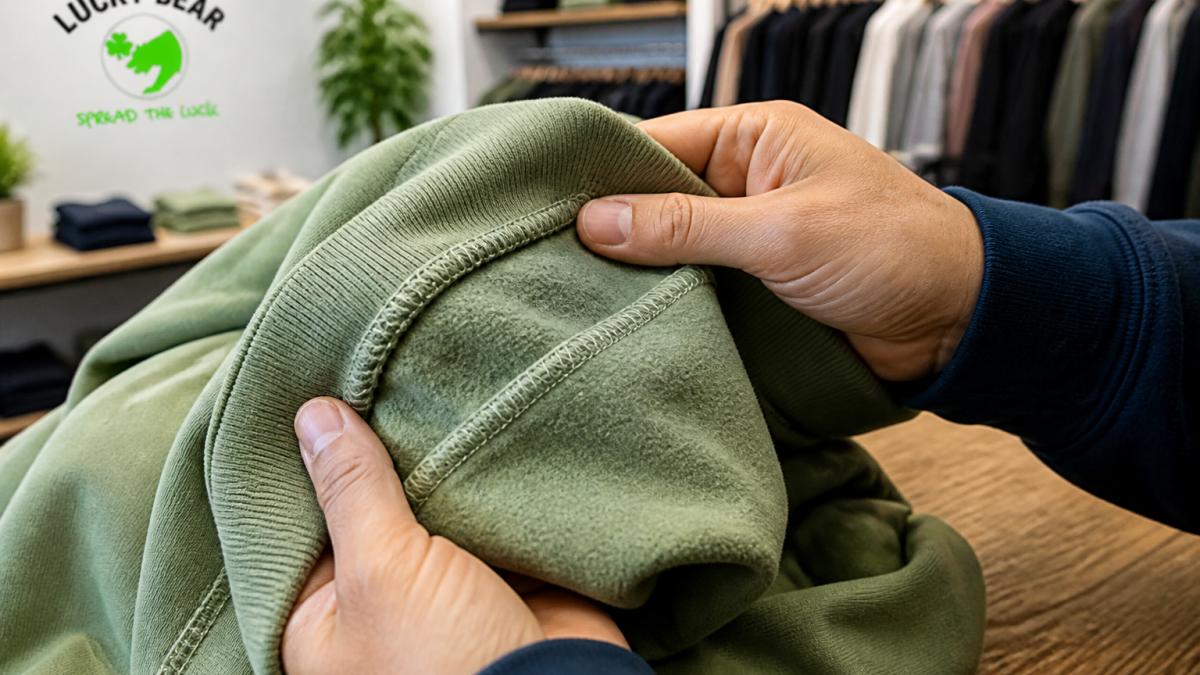
Here's a practical pre-purchase checklist:
- Seams are tight and even, with no loose threads
- Stitching runs in a straight, dense line
- Fabric feels substantial, not thin or see-through
For a deeper walkthrough of these checks, see how to tell quality clothing.
Stitching, Seams, and Sturdy Construction
Seam strength is the single best predictor of garment lifespan. A tight, dense stitch holds under tension. A loose, sparse one fails early.
Look for double-stitched or reinforced seams at high-stress areas. Check that the hem lies flat. Pull gently on a seam and watch whether the threads gap. If they do, walk away.
Sustainable Clothing Materials and How They Wear
No fiber is automatically durable. Fiber type sets the ceiling on how a fabric can perform, but weave, knit density, yarn size, dye method, and garment construction decide whether a piece actually reaches that ceiling.
The useful question is not "which fiber is most durable" but "which fiber-and-construction combination fits how I will wear this piece." Below are the trade-offs that matter most, organized by the failure mode each material is prone to.
Natural Fibers, Recycled Fibers, and Plant-Based Alternatives
- Organic cotton: Soft and breathable. Durability depends heavily on weave, a dense twill or canvas resists abrasion, while a loose jersey or voile wears thin at cuffs, elbows, and seat. Prone to shrinking and stretching without pre-shrinking or a small elastane blend.
- Hemp: Strong and abrasion-resistant, with natural resistance to UV and mildew. Starts stiff and softens with washing. Best for workwear, pants, and outer layers; less suited to next-to-skin pieces where softness matters.
- Linen: Very strong when dry and stronger when wet, but it wrinkles easily and abrades at fold points. Blends with cotton or a small amount of elastane reduce creasing and extend wear at high-friction areas.
Match the Material to the Use Case
The right choice depends on how you will wear the piece, not on which fiber ranks highest on a list.
- Hiking and trail shirts: Prioritize abrasion resistance and quick drying. Tightly woven synthetics, wool blends, and hemp blends outperform loose cotton, which holds moisture and chafes.
- Everyday tees: Prioritize shape retention through washing. A denser jersey knit with a small elastane content holds necklines and hems far longer than a thin, loose knit.
- Pants and workwear: Prioritize tensile strength and resistance to fold-point abrasion. Hemp blends, dense cotton twills, and reinforced synthetic blends are the practical choices.
- Outerwear: Prioritize shell fabric density, seam sealing, and hardware quality. The face fabric matters less than the zippers, storm flaps, and seam construction.
Why Fiber Type Alone Does Not Determine Longevity
Two garments with identical fiber content can differ by years in lifespan. The variables that decide it are usually invisible on a hangtag:
- Knit or weave density: A tighter, denser structure resists abrasion and distortion better than a loose one.
- Yarn size and twist: Longer-staple, higher-twist yarns pill less and hold shape longer than short-staple, low-twist yarns.
- Dye method: Piece-dyed and yarn-dyed fabrics generally hold color better through washing than surface-printed or garment-dyed pieces, which can fade at high-friction areas.
- Blend ratio: A small percentage of elastane improves recovery; too much reduces durability and makes repair harder.
If you want performance options built for movement, our moisture wicking hiking shirts guide covers what to look for in that use case.
How Long Should Quality Clothing Last?
A well-made garment should last years, not months. As a rough benchmark, a sturdy everyday tee can hold up for two to three years of regular wear. A good hoodie or pair of joggers can stretch to three to five.
These aren't guarantees. They're targets that separate durable pieces from fast fashion. The real variable is how well the garment is made and how you treat it.
The article gives rough lifespan benchmarks for well-made garments.
| Garment | Expected lifespan |
|---|---|
| Sturdy everyday tee | Two to three years of regular wear |
| Good hoodie or joggers | Three to five years |
| Outerwear built for the elements | Longer with proper care |
Cost Per Wear: Comparing Garment Lifespan and Upfront Cost
Cost per wear is the true price of a garment. Divide the upfront cost by the number of times you will realistically wear it. A cheaper item worn ten times can cost more per wear than a pricier one worn a hundred. That much is standard advice. What most guides skip is the method: how to estimate wears honestly, how to fold in repair and replacement, and how to compare two garments without guessing.
A Simple Method You Can Apply
- Estimate realistic wears per year. Be honest about frequency. A tee worn weekly is about 50 wears a year; a heavy jacket worn seasonally might be 20.
- Estimate expected lifespan in years. Use the construction signals from the inspection checklist above, seam density, reinforcement at stress points, fabric weight, rather than the brand's marketing.
- Multiply wears per year by expected years. That is your realistic total wears.
- Add expected repair costs. A resole, a zipper replacement, or a seam repair is a real cost. Subtract it from the value, or add it to the upfront price.
- Divide total cost (upfront plus repairs) by total wears. That is your cost per wear.
Worked Example
Suppose you are comparing two everyday tees.
- Tee A: $20 upfront, worn twice a week (about 100 wears a year), expected to last one year before seams fail. Total wears: 100. Cost per wear: $0.20.
- Tee B: $60 upfront, worn twice a week (about 100 wears a year), expected to last three years with one $10 seam repair. Total cost: $70. Total wears: 300. Cost per wear: about $0.23.
In this example the cheaper tee wins on cost per wear, but only because the lifespan estimate is generous. If Tee A actually fails at six months, its cost per wear doubles to $0.40, and Tee B becomes the better value. The math is only as good as the lifespan estimate, which is why the construction checks matter more than the price tag.
Where the Math Gets Complicated
- Repair access changes the equation. A garment with replaceable buttons, accessible seams, and standard zippers is cheaper to keep alive than one with glued construction or proprietary hardware.
- Replacement frequency matters more than upfront price. A $40 piece replaced every year costs more over five years than an $80 piece replaced once.
- Resale and reuse offset cost. A durable piece with resale value recovers part of its upfront cost; a fast-fashion piece usually recovers none.
- Care costs count. Dry-clean-only garments carry a per-wear cost that machine-washable pieces do not.
The lesson is simple. Buy less, wear longer, and let the math work in your favor. That is the heart of quality over quantity, but only when the lifespan estimate is grounded in construction, not hope.
How to Make Clothes Last Longer
You can add years to a garment with a few habits. Care and repair matter as much as construction. The American Cleaning Institute's fabric care guidance offers solid washing basics worth following.
Care, Repair, and End-of-Life
- Wash cold and inside out to reduce abrasion
- Skip the dryer when you can; air-dry to protect fibers
- Repair small tears and loose buttons early
- Store folded or hung properly to hold shape
Watch out: over-washing is the quiet killer of garment lifespan. Most clothes need far fewer washes than people give them.
Checking Certifications and Verifiable Claims
Certifications help, but only when they're real and specific. A logo means little if you can't trace what it covers. Look for clear, checkable claims rather than vague green language.
- Prefer specific fiber and process claims over broad "eco" labels
- Check that certifications name a recognized standard
- Be skeptical of unverifiable "planet-friendly" language
If you're weighing a brand's claims against a known name, see our Patagonia alternative guide.
Picking Durable Pieces for Your Next Adventure
Durability is a set of choices, not a single badge. If you're ready to shop, explore sustainable outdoor clothing brands for veterans. For a concrete durable piece, see the Sierra Summit Long Sleeve Shirt.
At Lucky Bear, we offer California-inspired apparel for beaches, mountains, and everything in between. Our Sierra Collection and Lucky Bear Surf Club collections capture the spirit of adventure.
Frequently Asked Questions
Is sustainable clothing more durable than regular clothing?
Not automatically. Durability comes from fabric weight, seam strength, stitching, and construction, not from a sustainability label alone. Some sustainable clothing uses sturdy natural fibers and reinforced seams. Judge each garment on its construction and material, and check for independent certifications that back up the claims.
Which sustainable clothing materials last the longest?
Longevity depends on fiber type and how the garment is built. Dense natural fibers like hemp and thick organic cotton tend to resist wear, while recycled fibers vary widely in quality. Fabric weight and abrasion resistance matter as much as the fiber itself. For high-wear items like joggers or shorts, look for heavier knits, reinforced seams, and tightly woven fabric, then follow the care label to protect the material.
How can you tell if a garment is well made?
Turn it inside out. Check for tight, even stitching, seams that are finished rather than raw, and buttons or zippers that feel secure. Look at fabric weight and whether it holds its shape when stretched. A well-made garment also has clear care instructions and, where relevant, certification details. These checks help you judge quality over quantity before you spend money.
How do you make sustainable clothes last longer?
Wash less often, use cold water, and air dry when possible to reduce wear and tear. Repair small issues like loose seams or missing buttons early. Store garments properly and rotate what you wear so no single piece takes constant abuse. These habits are ways to care for garments.
Durable clothing shouldn't be a guessing game. Lucky Bear makes apparel designed for real adventure, from the surf to the summit, with collections like the Sierra Collection and Lucky Bear Surf Club built for people who live outside. Get started with Lucky Bear and gear up for your next adventure.
