

Last Updated: November 1, 2026
Quick Summary
Prevent pilling on cotton hoodies by washing them inside out in cold water on a gentle cycle with liquid detergent, and skipping fabric softener and dryer sheets. Air-dry whenever possible, or use low heat and remove the hoodie while still slightly damp.
- Pilling is a sign that short fibers worked loose and tangled, not that the hoodie is falling apart.
- Fill the drum about two-thirds full so garments are not forced against each other.
- Powder detergent can leave grit in cold water that rubs against the fabric.
- Wash a daily-wear hoodie every three to five wears rather than after every wear.
- A dull fabric shaver blade pulls fibers instead of cutting them, making pilling worse.
Table of Contents
- Why Cotton Hoodies Pill and How to Spot the Difference
- How to Wash Hoodies So Pills Never Get a Chance to Form
- How to Dry a Hoodie Without Shrinking It or Adding Friction
- How to Remove Pilling from Clothes Once It Has Started
- The Best Fabric Shaver for Hoodies and How to Use It
- Preventing Pilling During Everyday Wear
- Choosing a Cotton Hoodie That Resists Pilling
- Frequently Asked Questions
Why Cotton Hoodies Pill and How to Spot the Difference
Fabric pilling is the formation of small balls of tangled fibers on the surface of a garment, and it happens when loose fibers rub together and knot up.
Here is the part most care guides skip: pilling is not a sign that your hoodie is falling apart.
It is a sign that short fibers worked their way loose and tangled. Longer fibers stay put.
Pilling vs. Lint, Shedding, and Fabric Damage
Before you treat anything, identify what you are actually looking at. People often blame pilling for three different problems.
- Pills: Small, firm balls attached to the surface. They roll between your fingers and stay put.
- Lint: Loose fuzz that transfers to other clothes or a lint roller. It is not attached.
- Shedding: Fibers releasing from the fabric, common in new fleece. It settles after a few washes.
Watch out: shaving a thin, damaged area makes the hole worse. Check the fabric first, then decide.
How to Wash Hoodies So Pills Never Get a Chance to Form
Most pilling starts in the washing machine, not on your back. Friction during the wash cycle pulls loose fibers to the surface, and heat sets the tangle.
Read the Care Label Before You Do Anything
The care label is the manufacturer's instruction for that specific garment, and it overrides generic advice. Look for four things:
- Fiber content: The percentage of cotton, polyester, rayon, or other fibers tells you how much the hoodie will shed. Higher cotton content with a brushed interior sheds more short fibers early on.
- Wash symbol: A tub with a number is the maximum water temperature in Celsius; a tub with a hand means hand wash only; a tub with an X means do not wash.
- Bleach symbol: A triangle with diagonal lines means non-chlorine bleach only; a plain triangle means any bleach; an X means none.
If the label says dry clean only, follow it. The label is the final word.
The Complete Wash Sequence for Cotton Hoodies
Follow this order every time. It is designed around the three high-friction zones on a hoodie.
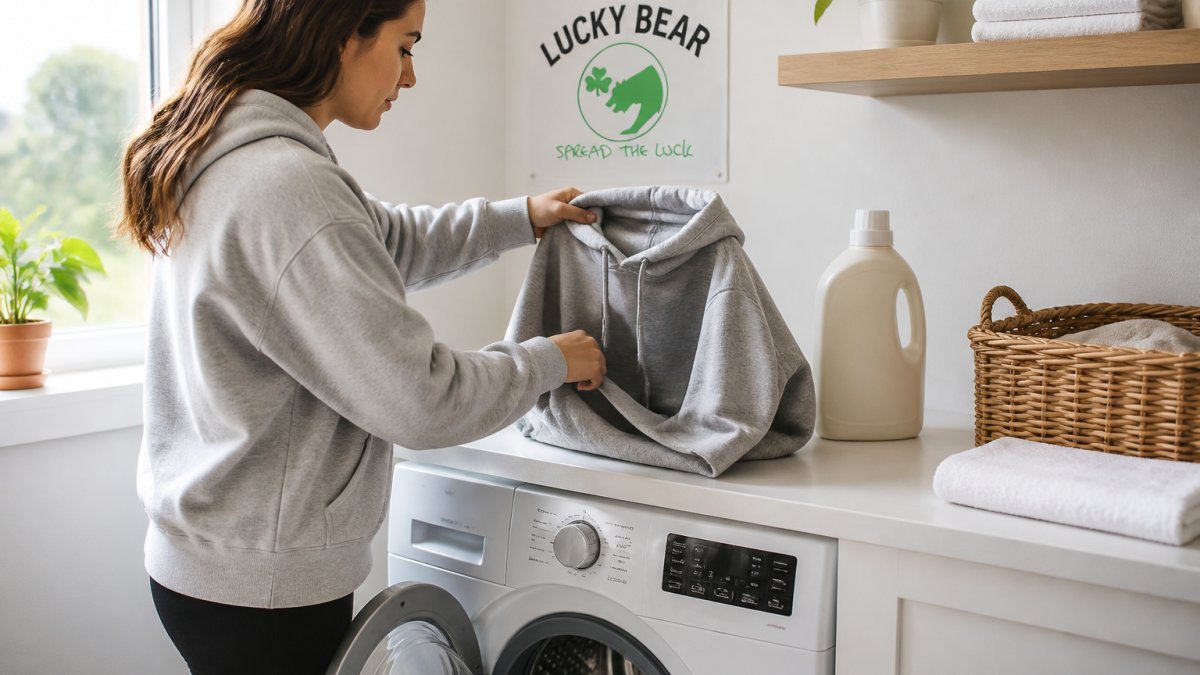
- Empty pockets and close all fasteners. Zip the zipper, button any snaps, and tie the drawcord so it does not whip against the fabric.
- Turn the hoodie inside out. This puts the wash action against the interior seams and the smooth back of the fleece rather than the outer face. It also protects any printed or embroidered logo.
- Sort by fabric weight and color. Wash hoodies with soft items such as t-shirts, underwear, or other fleece. Keep them away from jeans, towels, canvas jackets, and anything with zippers or hooks that abrade.
- Choose the right load size. The drum should be about two-thirds full, not packed. A crowded drum forces garments against each other and against the drum wall, which is exactly the friction that raises pills.
- Set the water temperature to cold. Cold water keeps cotton fibers relaxed and reduces the chance that short fibers work loose. Hot water can also shrink cotton and set wrinkles.
- Select a gentle or delicate cycle. These cycles use slower agitation and shorter spin speeds. A normal cycle is acceptable if the load is mostly soft items, but gentle is safer for fleece.
- Use liquid detergent, not powder. Powder detergent can fail to dissolve in cold water and leave grit that rubs against the fabric. Liquid detergent disperses evenly. Follow the dosing line on the cap; using more than recommended leaves residue that attracts lint and can make the fabric feel stiff.
- Skip fabric softener and dryer sheets on fleece. Softeners coat fibers with a waxy film that can trap lint and reduce the fleece's loft. If you want a soft feel, use a wool dryer ball in the dryer instead.
- Run an extra rinse if you used a heavy dose of detergent. Residual detergent is a common cause of stiffness and surface fuzz.
How Often to Wash a Hoodie
A hoodie worn over a t-shirt does not need a wash after every wear. Air it out between wears by hanging it in a well-ventilated spot, and wash when it smells, shows visible marks, or feels stretched at the cuffs. Fewer wash cycles means less mechanical wear overall. A common pattern is to wash a daily-wear hoodie every three to five wears, and a hoodie worn only indoors less often.
What to Do If the Hoodie Pills After a Gentle Wash
If pills appear even after you follow this routine, the cause is usually one of three things: the fabric has a high proportion of short fibers (common in lower-cost fleece), the hoodie is being rubbed by a backpack or seatbelt during wear, or the garment is simply at the end of its useful life. Check the care label and the fabric weight first. A heavyweight fleece with a dense brushed interior will usually outlast a thin, loosely knit hoodie. If the pilling is concentrated at the cuffs and seams, it is likely friction from wear rather than the wash.
Follow this wash sequence in order to keep friction and loose fibers to a minimum.
| Step | What to do | Why it matters |
|---|---|---|
| 1 | Empty pockets, zip zipper, tie drawcord | Stops fasteners whipping the fabric |
| 2 | Turn the hoodie inside out | Puts wash action on interior seams |
| 3 | Sort by fabric weight and color | Keeps jeans and towels away |
| 4 | Fill drum about two-thirds full | Crowding forces garments together |
| 5 | Set water temperature to cold | Keeps cotton fibers relaxed |
| 6 | Select gentle or delicate cycle | Slower agitation and shorter spin |
| 7 | Use liquid detergent, not powder | Powder leaves grit that rubs fabric |
| 8 | Skip fabric softener and dryer sheets | Coatings trap lint and cut fleece loft |
How to Dry a Hoodie Without Shrinking It or Adding Friction
Air-dry your hoodie whenever you can. Heat and tumbling are the two fastest ways to shrink cotton and roughen its surface.
If you must use the dryer, use low heat and pull the hoodie out while it is still slightly damp. That last bit of drying happens on the hanger, which limits both shrinkage and the tumbling friction that brings pills to the surface.
A few rules that save hoodies:
- Never dry clean a cotton hoodie unless the care label says so.
- Skip dryer sheets on fleece; they coat the fibers.
- Do not hang a wet hoodie by the hood; the weight stretches it.
How to Remove Pilling from Clothes Once It Has Started
Removing pills is a separate job from preventing them, and it is easy once you know the tools. The goal is to cut the pills off at the surface without pulling more fiber loose.
- Fabric shaver: The fastest option. A small electric tool with a rotating blade and a guard.
- Sweater comb: A fine-toothed comb that lifts pills off knit fabric gently.
- Lint roller: Good for loose fuzz, useless on firm pills.
Work on a flat surface, stretch the fabric slightly, and use light passes. Do not press hard or hold the shaver in one spot. Finish with a lint roller to pick up the debris.
The Best Fabric Shaver for Hoodies and How to Use It
A fabric shaver with an adjustable guard and a sharp, replaceable blade gives the most control on hoodies.
Here is one way to use a fabric shaver:
- Wash and fully dry the hoodie first. Damp fabric tears.
- Lay it flat and smooth the area you are treating.
- Start on the lowest speed over a small test patch.
- Move in slow, overlapping passes with light pressure.
- Empty the chamber and clean the blade after each use.
A dull blade pulls fibers instead of cutting them, which makes pilling worse.
Preventing Pilling During Everyday Wear
Daily friction does as much damage as the washer. Backpacks, seatbelts, and rough outer layers rub the same spots all day. A little awareness goes a long way.
- Rotate your hoodies so no single one takes all the wear.
- Wear a smooth jacket over a hoodie instead of a rough canvas pack strap against it.
- Avoid rough surfaces like concrete ledges and abrasive car seats.
If you want a deeper routine, our guide on habits that stop hoodie pilling before it starts walks through the daily side in more detail.
Choosing a Cotton Hoodie That Resists Pilling
The single biggest factor in pilling is the fabric itself, and you can judge most of it before you buy. Longer cotton fibers, tighter knits, and a denser brushed interior all resist pilling better than short-fiber, loosely knit fabric. Blends matter too: a cotton-polyester blend behaves differently from pure cotton, and neither is automatically better. What matters is fiber length and how tightly the yarn is spun.
Fiber Length and Yarn Quality
Cotton fibers vary in length. Long-staple cotton (such as Pima or Supima) has fibers that stay twisted into the yarn, so fewer loose ends work their way to the surface. Short-staple cotton, common in lower-cost fleece, has more fiber ends per yard of yarn, and those ends are the raw material for pills. You will not always see fiber length on a label, but you can infer it from the price, the brand's reputation, and the feel of the fabric: a dense, smooth hand usually signals longer fibers and tighter spinning.
Knit Structure and Fleece Density
A hoodie's outer shell is usually a knit, and the interior may be brushed fleece. The tighter the knit, the less room there is for fibers to migrate. Look for a fabric that feels substantial and holds its shape when you stretch it gently. A brushed interior should feel dense and even, not loose and fluffy. Loose, lofty fleece sheds more short fibers in the first few washes, which is why some new hoodies seem to pill immediately.
How Fiber Blends Affect Pilling
- 100% cotton: Soft and breathable, but short-staple cotton can pill. Long-staple cotton resists pilling better.
- Cotton-polyester blend: Polyester fibers are strong and smooth, and they can reduce pilling by anchoring cotton fibers. However, polyester can also pill on its own if the fibers are short. A 50/50 or 60/40 blend is common and generally durable.
- Cotton-rayon blend: Rayon is soft but weak when wet, and it can pill more readily. Treat rayon blends gently.
What to Check Before You Buy
- Fabric weight: Heavier fleece tends to hold up better than thin, flimsy knits.
- Fiber content: Read the label. Note the blend and the cotton type if listed.
- Construction: Look for durable stitching, flatlock seams, and a brushed interior that feels dense, not loose.
Care Symbols and What They Mean for Pilling
A care label with a low wash temperature and a flat-dry symbol is a good sign for pilling resistance, because it tells you the maker expects gentle handling. A label that allows high heat and tumble drying is a warning that the fabric may be more durable but also more prone to surface change. When in doubt, follow the most conservative symbol.
For a fuller breakdown of what separates a durable hoodie from a short-lived one, read our buyer's guide to durable hoodies. If you want a concrete starting point, the Spread the Luck Classic heavyweight hoodie and the Lucky Bear Classic heavyweight hoodie are both built with a premium heavyweight feel and durable stitching that holds its shape, which gives you a better base to work from than a thin knit.


Frequently Asked Questions
Does pilling mean a cotton hoodie is poor quality?
Not necessarily. Pilling happens when short loose fibers work their way to the surface and tangle into little balls, and that can happen on good fabric too. Fiber length and knit construction matter more than price. A heavyweight cotton-polyester blend with tightly spun yarns pills less than a loose, fuzzy knit, but even a well-made hoodie will pill if you wash it hot and tumble it on high heat every week.
Can pilling on a cotton hoodie be reversed?
You can remove the pills, but you cannot restore the fabric to brand new. A fabric shaver or lint remover lifts the tangled balls off the surface and makes the hoodie look smooth again. What you cannot do is put the fibers back into the knit. Once pilling starts, regular shaving plus a gentler wash routine keeps it from coming back as fast. Wash inside out in cold water and air-dry to slow the next round.
Should I wash a cotton hoodie inside out to prevent pilling?
Yes, and it is one of the easiest habits to build. Turning the hoodie inside out puts the friction of the wash cycle on the inner face instead of the outer surface where pills show. Pair that with cold water, a gentle cycle, and a liquid detergent, and you cut the abrasion that creates pills in the first place. Zip up any zippers and fasten drawcords so they do not snag the fabric.
Does fabric softener prevent pilling on cotton hoodies?
No, and it can make things worse. Fabric softener coats fibers and reduces absorbency, and on fleece it can leave a residue that traps loose fibers on the surface. Skip it. Use a small amount of liquid detergent instead, and add a mesh laundry bag if you want extra protection. Air-drying or using low heat does far more for pill prevention than any softener.
