
Last Updated: October 25, 2026
Quick Summary
To stop hoodie pilling, wash less aggressively: turn the hoodie inside out, use cold water and the gentle cycle, avoid overcrowding the washer, and air-dry instead of tumble drying on high heat. Most hoodie pilling starts in the laundry, where friction and heat loosen fibers.
- Turn the hoodie inside out before washing to keep its outer face away from zippers and seams.
- Wash hoodies in cold water on the gentle cycle to slow fiber shedding and reduce abrasion.
- Keep hoodies away from towels, jeans, and anything with zippers or Velcro.
- Air-dry hoodies first; if using a dryer, choose low heat and remove while slightly damp.
- Use a fabric shaver with adjustable blade height and a mesh guard to remove existing pills safely.
Table of Contents
- What Causes Fabric Pilling on Hoodies
- How to Wash a Hoodie So It Sheds Less Fiber
- Drying Habits That Cut Friction and Heat Damage
- How to Remove Pilling From Clothes Without Making It Worse
- Choosing a Fabric Shaver for Clothes That Won't Chew the Knit
- When Pilling Is Normal and When It Signals a Quality Problem
- Shop Hoodies Built to Hold Up to Real Wear
- Frequently Asked Questions
What Causes Fabric Pilling on Hoodies
Fabric pilling is the formation of small fiber balls on a garment's surface, caused when loose fibers tangle together through friction and abrasion.
Those fiber balls show up first where you move most: cuffs, underarms, the sides of the torso. The fabric isn't failing.
Below, we'll show you exactly how to stop hoodie pilling before that first wash, because most of the damage happens in the laundry, not on the trail.
Short Fibers, Loose Ends, and the Friction That Tangles Them
Every knit fabric starts with fibers spun into yarn. Some fibers are long and stay locked in the yarn. Others are short and work their way to the surface, where friction rolls them into pills.
Three things speed this up:
- Friction and abrasion from rubbing against seats, straps, and other garments
- Loose fibers that were never fully twisted into the yarn
- Heat and rough washing, which loosen fibers faster than cold, gentle care
The good news: you control two of those three. The third you can plan around when you shop.
Fleece, Knit, and Woven: How Construction Changes the Risk
Fleece and knit hoodies pill more than woven jackets because their structure leaves more fiber ends exposed. A tightly knit, heavyweight fleece with dense stitching sheds less than a thin, loosely knit one.
That's the real difference between a hoodie that lasts and one that fuzzes up by month two. Construction, not luck. Durable stitching and a heavier fabric hold fibers in place longer.
How to Wash a Hoodie So It Sheds Less Fiber
The single best way to stop pilling is to wash less aggressively. Most hoodie damage happens in the washer and dryer, not on your back. Change those two habits and you'll cut friction dramatically.
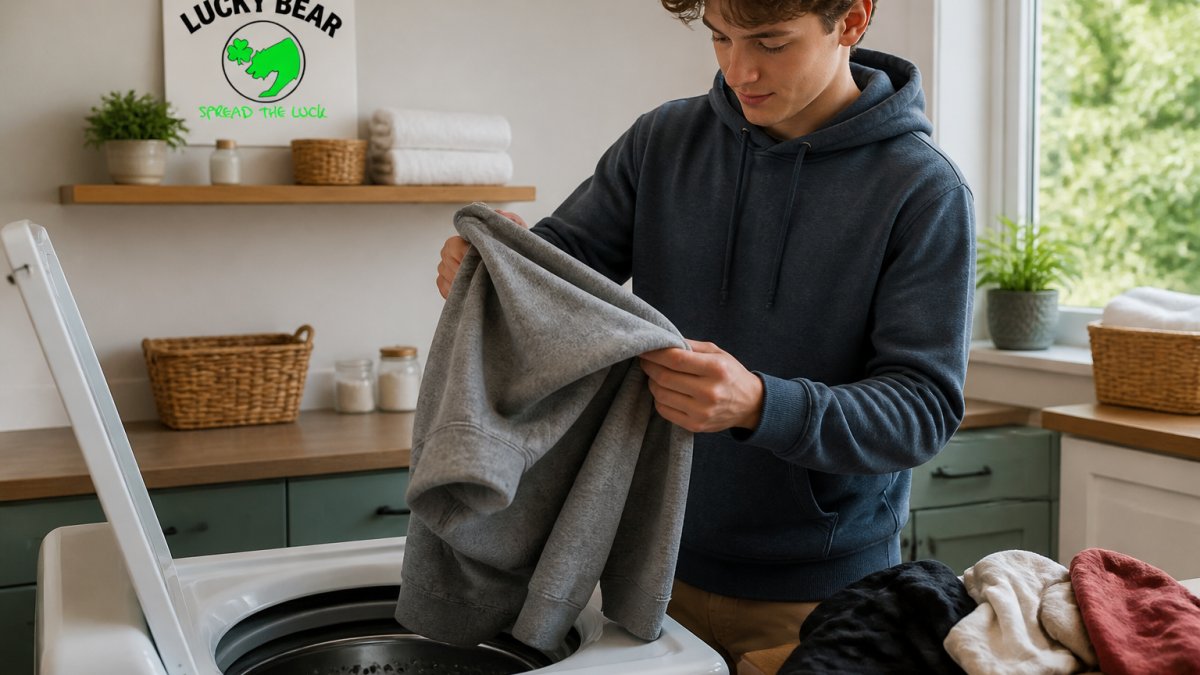
Here's the routine we recommend for every hoodie:
- Turn the hoodie inside out before it goes near the washer
- Use cold water, never hot
- Pick the gentle cycle
- Sort by fabric type and wash hoodies with other soft knits
- Skip the overcrowding so garments don't rub together
- Use a small amount of mild detergent
- Air-dry whenever you can
Cold Water, Gentle Cycle, and the Inside-Out Rule
Cold water slows fiber shedding and protects the fabric surface. The gentle cycle reduces the rubbing and abrasion that create pills in the first place. And washing inside out keeps the outer face of the hoodie away from zippers, seams, and other rough edges.
A common mistake is stuffing the washer full. Overcrowding means more rubbing, more friction, and more pills. Give hoodies room to move.
Sorting by Fabric Type and Avoiding an Overcrowded Washer
Keep hoodies away from towels, jeans, and anything with zippers or Velcro. Those rough surfaces act like sandpaper on soft fleece. Wash separate garments by weight and texture, and your hoodie will thank you.
The American Cleaning Institute's laundry guidance backs the basics here: sort by fabric, use the right cycle, and don't overload the machine.
Hoodie-Specific Settings: Fleece, Blends, and Brushed Interiors
General laundry advice only gets you so far. A hoodie's fabric and construction decide how much friction it can take before it pills, so match the wash to the garment:
- Heavyweight cotton fleece (roughly 12 oz and up): The dense knit holds fibers in place, so a cold gentle cycle with a low spin speed is usually enough. Avoid the permanent-press cycle, which adds a longer, hotter dry.
- Cotton-poly blends: Polyester fibers are strong but fine, and they migrate to the surface faster than cotton. Wash these inside out on gentle and keep the spin moderate; high spin speeds fling the garment against the drum and accelerate surface fuzz.
- Brushed or French terry interiors: The brushed face is the part that pills first. Turn the hoodie inside out so the brushed side gets the gentler contact, and skip fabric softener, which coats the fibers and can make the brushed surface mat down unevenly.
Reading the Care Label Before You Choose a Cycle
Care symbols are not decoration. Before the first wash, translate the label into a plan:
- A washtub with a number tells you the maximum water temperature in Celsius, a 30 means cold-to-warm, a 40 means warm. When in doubt, wash cooler than the label allows.
- A washtub with a hand means hand wash only. Fill a basin with cool water, add a capful of mild detergent, submerge the hoodie, and gently press it up and down for a few minutes. Don't wring or twist, squeeze the water out against the side of the basin.
- A triangle with an X means do not bleach. This matters for colored and printed hoodies, where bleach can strip dye and weaken fibers.
If the label is missing or unreadable, default to cold water, gentle cycle, and air-drying. That combination is safe for nearly every hoodie fabric.
When to Hand Wash Instead
Hand washing is slower, but it is the lowest-friction option and worth it for a hoodie you want to keep looking new. It is also the right call for any hoodie with a large screen print, appliqué, or embroidery, because the washer's agitation is what lifts and cracks prints over time.
Match the wash to the hoodie's fabric and construction with these settings.
| Hoodie type | Wash setting | Key note |
|---|---|---|
| Heavyweight cotton fleece (roughly 12 oz and up) | Cold gentle cycle, low spin | Avoid permanent-press cycle |
| Cotton-poly blends | Inside out, gentle, moderate spin | High spin speeds accelerate surface fuzz |
| Brushed or French terry interiors | Inside out | Skip fabric softener |
| Thin, loosely knit fashion fleece | Delicate, in a mesh laundry bag | Bag adds a barrier against the drum |
| Any hoodie under about 8 oz | Hand wash or delicate cycle | Shorter agitation matters most |
Drying Habits That Cut Friction and Heat Damage
Dryer heat is a pilling accelerator. High heat loosens fibers and makes them more likely to tangle. Tumble drying on a hot setting is the fastest way to fuzz up a fresh hoodie.
Lucky Bear Tropical Zip Up Hoodie →
Our rule: air-dry first. Hang or lay flat in the shade. If you must use the dryer, choose low heat and pull the hoodie out while it's still slightly damp.
A few habits that help:
- Shake the hoodie out before drying to relax the fibers
- Avoid dryer sheets that coat the fabric and trap lint
- Never dry a hoodie with heavy items like denim
How to Remove Pilling From Clothes Without Making It Worse
You can remove existing pills safely, but the method matters. Pulling or shaving too aggressively thins the fabric and can leave bald patches.
Start with a fabric shaver or lint remover on a flat surface. Work in gentle, even passes. Don't press hard. For small areas, a fine-tooth comb or a bit of tape lifts pills without cutting into the knit.
Safe Removal on Fleece, Prints, and Embellished Hoodies
Fleece needs a light touch. Hold the shaver flat and let the blades do the work. On printed or embellished hoodies, avoid the graphic entirely and work around it.
For delicate spots, use a soft brush or your fingers to loosen pills before reaching for a tool. Check the FTC's clothing care labeling guidance for what the care label on your hoodie is actually telling you.
Choosing a Fabric Shaver for Clothes That Won't Chew the Knit
A good fabric shaver for clothes protects the knit while it removes pills. The wrong one cuts too close and damages the fabric surface.
Look for these features:
- Adjustable blade height so you can match the fabric
- A mesh guard that keeps blades off the knit
- A lint chamber that's easy to empty
Skip cheap shavers with fixed blades. They're the ones that leave holes. A mid-range model with adjustable height is worth the few extra dollars.
When Pilling Is Normal and When It Signals a Quality Problem
Some pilling is normal, especially on fleece and knit hoodies in high-friction spots. Pilling that shows up across the whole garment within a few washes is a different story.
Watch for these signs of a real quality issue:
- Pills everywhere, not just at friction points
- Fabric that feels thin or see-through after a few washes
- Seams that pull apart or stitching that frays
If you want a practical way to judge a garment before you buy, our guide on how to tell quality clothing walks through seven checks that separate durable fabric from fast fashion.
Shop Hoodies Built to Hold Up to Real Wear
You can do everything right and still fight pilling if the hoodie was built to fail. Fabric preparation starts at the factory, and heavyweight fleece with dense stitching holds up far better than thin knits.
That's why we build our hoodies the way we do. The Lucky Bear Classic Unisex Heavyweight Hooded Sweatshirt uses an ultra-soft brushed interior and durable stitching that holds its shape, so it resists the friction that causes pills. The Lucky Bear Classic Unisex Heavyweight Hooded Sweatshirt uses an ultra-soft brushed interior and durable stitching that holds its shape, so it resists the friction that causes pills. The Spread the Luck Classic Unisex Heavyweight Hooded Sweatshirt offers the same heavyweight feel for anyone who wants a different look.


Want more options? Our roundup of the best durable hoodies for hiking covers picks vetted for real wear. For cooler mornings and layering, the Lucky Bear Tropical Zip Up Hoodie brings premium soft-touch fleece with a full-length zipper and roomy front pockets.

The Textile Exchange's fiber and materials resources explain why fiber choice shapes how a garment ages, which is exactly why we start with durable materials.
Frequently Asked Questions
Does pilling mean a hoodie is low quality?
Not automatically. Pilling happens when short or loose fibers work free and tangle under friction, and that can occur on soft fleece and knit fabrics at many price points. Quality shows up in how tightly the fabric is knit, how well fibers are finished, and whether the garment holds its shape over time. A hoodie that pills heavily in the first few washes across the whole surface, or thins out at the same time, is a bigger warning sign than a few pills under the arms.
Can you reverse pilling on a hoodie?
You can remove the pills, but you cannot put the fiber back. A fabric shaver for clothes or a sweater comb lifts the tangled balls off the surface so the hoodie looks smooth again. What you cannot do is restore fibers that have already shed. That is why prevention matters: washing inside out, using cold water and a gentle cycle, and air-drying where possible slows the process so you need to shave the garment far less often.
Should you wash a hoodie inside out to prevent pilling?
Yes. Turning the hoodie inside out puts the soft brushed interior against itself instead of against zippers, buttons, and rough seams from other garments. That reduces the abrasion on the outer face, which is the side people actually see. It also protects printed graphics and embroidery. Pair it with cold water, a gentle cycle, and a laundry load sorted by fabric type, and you cut a large share of the friction that creates pills.
What tool is safest for removing pills from a hoodie?
A fabric shaver with an adjustable guard and a small perforated head is the safest common option. Lay the hoodie flat, stretch the pilled area slightly, and use short passes with light pressure rather than pressing down. Skip the shaver entirely on thin spots, loose threads, or delicate embroidery. For printed hoodies, work around the graphic instead of over it. A sweater comb is a slower but gentler alternative for fleece.
Pilling is one of the most common complaints we hear, and it's almost always fixable with a few changes to how you wash and dry. We build heavyweight fleece hoodies with dense stitching and a brushed interior designed to resist the friction that causes pills in the first place. Browse the Lucky Bear collection and find a hoodie built for wherever the day takes you, then add one to your cart and put these habits to work.
