

Table of Contents
- What Makes a Hoodie Durable Enough for Hiking Trails
- Quick Comparison: Best Durable Hoodies for Hiking
- Hiking Hoodie Materials: What Holds Up and What Doesn't
- 1. Spread the Luck Classic Heavyweight Hoodie: Best Overall
- 2. Sierra Summit Unisex Hoodie: Best for Cool Mountain Layers
- 3. Lucky Bear Tropical Zip Up Hoodie: Best for Variable Weather
- 4. Unisex Fleece Zip Up Hoodie: Best Lightweight Hiking Hoodie
- 5. Sierra Sunset Premium Sweatshirt: Best Budget Pick
- How Should a Sun Hoodie Fit Compared to a Warm Hiking Hoodie?
- Caring for Your Hiking Hoodie So It Lasts
- Frequently Asked Questions
Last Updated: October 15, 2026
What Makes a Hoodie Durable Enough for Hiking Trails
Durable hoodies for hiking are built around three things: fabric weight, seam construction, and abrasion resistance against rock, pack straps, and brush. At Lucky Bear, we build ours around one question: will this still perform after a full season of use?
The best durable hoodies for hiking share a few traits. Heavier fabric resists snags better than thin knits. Reinforced stitching at stress points keeps seams from blowing out.
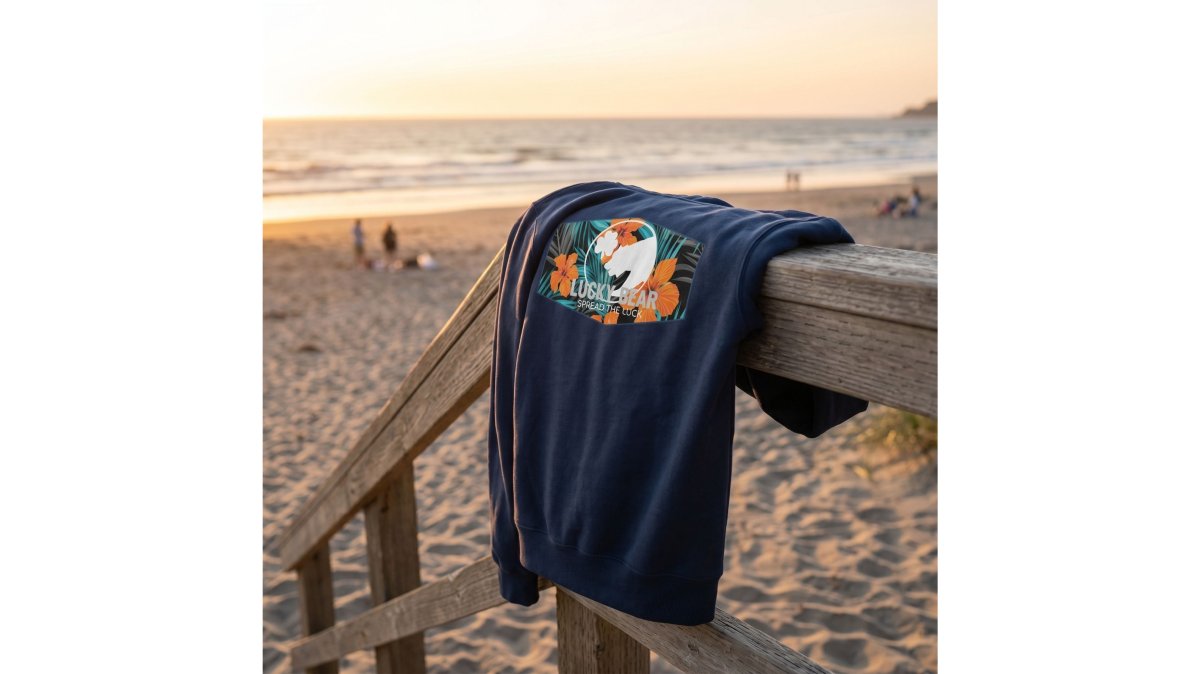
Most hoodies fail in predictable places: the shoulder seam, cuff, and underarm, where abrasion and stretch do the most damage.
Quick Comparison: Best Durable Hoodies for Hiking
Here is how our picks stack up for hiking use. Each earns its place for a different reason.
| Hoodie | Price | Best For | Key Strength |
|---|---|---|---|
| Spread the Luck Classic Heavyweight Hoodie | $45.00 | Best overall | Heavyweight feel, durable stitching |
| Sierra Summit Unisex Hoodie | $45.00 | Cool mountain layers | Soft fleece, cooler evenings |
| Lucky Bear Tropical Zip Up Hoodie | $45.00 | Variable weather | Full zip, adjustable hood |
| Unisex Fleece Zip Up Hoodie | $45.00 | Lightweight hiking | 8.5 oz fabric, double-needle seams |
| Sierra Sunset Premium Sweatshirt | $40.00 | Budget pick | Lowest price, fleece interior |
The differences come down to how you hike: warm-weather hikers want breathability and lighter fabric, while cooler, higher-elevation hikes call for insulation and coverage. Match the hoodie to the conditions.

Hiking Hoodie Materials: What Holds Up and What Doesn't
Fabric blend and weight decide how a hoodie performs over time. Cotton-polyester fleece blends hold their shape better than pure cotton, which stretches and sags with washing.
Here is the split most buying guides blur together.
- Cotton-polyester fleece (roughly 50/50 to 80/20): Balances softness with shape retention. The polyester content is what resists pilling and helps the fabric spring back after washing.
- Heavier fabric weight: Better abrasion resistance against rock, pack straps, and brush. An 8.5 oz fabric is a reasonable lightweight floor; 10 to 13 oz is where warm-weather hoodies start to feel substantial.
- Double-needle and split-stitch seams: Two rows of stitching at stress points spread load across more fabric, so a single broken thread does not open the whole seam.
- Ribbed cuffs and waistbands (1x1 ribbing): Hold their stretch instead of going slack, which keeps the hoodie from riding up under a pack.
- Jersey-lined hoods and metal zippers: A lined hood holds shape and reduces chafe; a metal zipper outlasts a cheap plastic one but adds a wear point if the pull snags.
Abrasion is the real durability test on a trail. Rock scrambles, granite slabs, and brush act like sandpaper on the shoulders, forearms, and hips where a pack rides.
For sun protection, many hikers look for a dedicated sun hoodie with a UPF rating.
UPF ratings and sun-protective fabric guidance
1. Spread the Luck Classic Heavyweight Hoodie: Best Overall
The Spread the Luck Classic Unisex Heavyweight Hooded Sweatshirt is our top pick for hiking because it holds up where it counts. Its premium heavyweight feel is not thin or flimsy, and durable stitching keeps its shape through repeated use, exactly what trail wear demands.

The ultra-soft brushed interior stays comfortable against skin on long days, and the relaxed street-ready fit leaves room for a base layer without feeling bulky. It moves from trailhead to town without looking out of place.
Pros:
- Heavyweight fabric resists snags and pilling
- Durable stitching holds shape over time
- Relaxed fit layers well over a base layer
Cons:
- Heavier than a dedicated sun hoodie for hot-weather hikes
For most hikers, this is the hoodie to start with. It handles cool mornings, breezy ridgelines, and everything between.
2. Sierra Summit Unisex Hoodie: Best for Cool Mountain Layers
The Sierra Summit Unisex Hoodie is built for cooler evenings and higher elevations. Soft, smooth, and stylish, it is an easy layer to pull on when the temperature drops after sunset. The Sierra Collection draws on mountain winters, so warmth is the priority.

Pros:
- Soft fleece feel for cooler conditions
- Warm enough for evening and shoulder-season hikes
- Clean look that works off the trail
Cons:
- Warmer build is overkill for hot, exposed trails
If your hikes run cool and you want insulation without a heavy jacket, this is the layer to grab.
3. Lucky Bear Tropical Zip Up Hoodie: Best for Variable Weather
Weather on the trail changes fast, and the Lucky Bear Tropical Zip Up Hoodie is made for that. The full-length zipper lets you vent heat on the climb and zip up when the wind picks up. An adjustable drawstring hood adds coverage when conditions shift.
It comes with front hand-warmer pockets and a relaxed fit for everyday wear. The premium soft-touch fleece balances comfort and warmth. For hikes where you cannot predict the temperature, a zip-up gives you options a pullover cannot.
Pros:
Spread the Luck Classic Unisex Heavyweight Hooded Sweatshirt →
- Full zip for easy layering and venting
- Adjustable hood for wind and light rain
- Hand-warmer pockets for cold hands
Cons:
- Zipper adds a point of wear over time with heavy use
4. Unisex Fleece Zip Up Hoodie: Best Lightweight Hiking Hoodie
For warmer hikes and fast movement, the Unisex Fleece Zip Up Hoodie keeps weight down. It is an 80% cotton, 20% polyester blend fleece with a 100% cotton face and 8.5 oz fabric weight. Split stitch double-needle sewing on all seams strengthens the build, and 1x1 ribbing at the cuffs and waistband keeps its stretch.
The jersey-lined hood and metal kissing zipper round out a hoodie made to move. It layers over a tee for cool mornings and packs down when the day warms up.
Pros:
- Lighter fabric for warmer conditions
- Double-needle seams for durability
- Ribbed cuffs and waistband hold their shape
Cons:
- Less insulation than the heavier picks
5. Sierra Sunset Premium Sweatshirt: Best Budget Pick
The Sierra Sunset Unisex Premium Sweatshirt is the lowest-priced option here at $40.00. It has a classic silhouette with a ribbed crew neck, long sleeve cuffs, and a flat hem. The soft fleece interior makes it a comfortable everyday layer.
One thing to know: this sweatshirt runs small, so order one size larger than usual for the right fit. It has no hood, which makes it a better match for layering under a shell than for standalone wind protection.
Pros:
- Lowest price of the group
- Soft fleece interior for comfort
- Layers well under a jacket
Cons:
- Runs small, so sizing up is needed
- No hood for wind or sun coverage
How Should a Sun Hoodie Fit Compared to a Warm Hiking Hoodie?
A sun hoodie should fit close to the body for coverage, while a warm hiking hoodie should fit with room to layer.
Think of your hoodie as one piece in a three-layer system.
Here is how to size each type:
- Sun hoodie: Snug but not tight. You want the fabric in contact with your skin at the forearms and neck, with extended cuffs or thumbholes to cover the backs of your hands. A loose sun hoodie defeats its own purpose.
- Warm hiking hoodie: Size for the layer underneath. If you wear a midweight base layer, try the hoodie on over it. The shoulders should have a little slack, and the cuffs should stay put when you reach forward.
- Shell compatibility: A hoodie that fits well on its own can still be too bulky under a shell. Check that your shell zips over the hoodie without compressing it, and that the hoodie hood does not fight the shell hood.
Body shape changes the answer too.
Fit also affects durability: too tight strains the shoulder and underarm seams where wear shows first, while too loose snags on brush and pack straps. The right fit protects both the fabric and your comfort.
Caring for Your Hiking Hoodie So It Lasts
How you wash a hoodie decides how long it lasts. Pilling, fading, and stretched cuffs usually come from heat and friction, not the trail itself. A few habits keep fabric and stitching in shape for years.
- Wash in cold water to protect fabric and color
- Turn the hoodie inside out to reduce surface abrasion
- Skip the dryer or use low heat to prevent shrinkage and pilling
- Air dry flat to keep the shape of cuffs and hood
- Wash with similar fabrics to cut down on friction
Long-term ownership comes down to care and repair. A small seam fix early prevents a bigger tear later, so repair a loosening cuff or seam before the damage spreads. Treat a good hoodie like gear, and it will outlast several cheap replacements.
Frequently Asked Questions
What materials make a hiking hoodie durable?
Cotton-polyester fleece blends hold up best on trails. Look for at least 80% cotton with 20% polyester, which resists pilling and keeps its shape after repeated washes. Reinforced stitching at stress points, double-needle seams, and ribbed cuffs add years of wear. Fabric weight matters too: 8.5 oz/yd² (280 g/m²) fleece handles abrasion from backpack straps and branches far better than thin 5 oz blends. Jersey-lined hoods and twill neck tape also prevent stretching and fraying over time.
Is a hoodie good for hiking?
Yes, in the right conditions. A durable hoodie works well as a mid-layer in cool weather or as a standalone piece on mild trails. Heavyweight fleece traps warmth and blocks light wind, while the hood adds neck and head coverage without a separate hat. For hot, exposed hikes, a lightweight sun hoodie with UPF protection is the better call. The key is matching fabric weight to conditions: 8.5 oz fleece for 40-60°F days, lighter knits for 60°F and above.
How should a sun hoodie fit?
A sun hoodie should fit relaxed but not baggy. You want enough room to layer a base tee underneath without the fabric bunching at your shoulders or armpits. The hood should cover your ears and neck without pulling tight across your forehead. Sleeves should reach your wrists, and thumbholes help hold coverage over the back of your hands. If the hem rides up when you raise your arms, size up. A relaxed street-ready fit works for most hikers.
Are sun hoodies warm enough for hiking?
Sun hoodies are built for heat management, not insulation. They block UV rays and wick sweat, which keeps you cooler on exposed trails, but they add minimal warmth. For cool mornings or high-altitude hikes, pair a sun hoodie with a heavyweight fleece layer like the Spread the Luck Classic Hoodie. Together they handle temperature swings from 40°F to 75°F. On their own, sun hoodies work best above 65°F.
How do you wash a hiking hoodie without damaging it?
Turn the hoodie inside out and wash cold on a gentle cycle with mild detergent. Skip fabric softener, which clogs fleece fibers and reduces breathability. Tumble dry low or hang dry to prevent shrinkage and pilling. Avoid washing after every hike; spot-clean stains and air out between wears. For heavy odors, add half a cup of white vinegar to the rinse cycle. This routine keeps stitching tight and fabric soft for years.
Hiking gear takes a beating, and a hoodie that pills or splits after a few trips is money wasted. At Lucky Bear, we build apparel for the beach, the mountains, and everywhere between, with durable stitching, premium heavyweight fabrics, and fits made to move. Whether you want the Spread the Luck Classic Heavyweight Hoodie for cool ridgelines or the Unisex Fleece Zip Up Hoodie for warmer climbs, our lineup covers the trail and the town. Add to cart and gear up for your next adventure.