

Last Updated: November 22, 2026
Quick Summary
Patagonia surf apparel is built for cold water, long sessions, and decades of wear, while Volcom focuses on warm-water boardshorts and streetwear with skate-park style. Choose Patagonia for cold-water wetsuits and technical layers, and Volcom for warm-water boardshorts and everyday street style.
- Patagonia's Worn Wear repair program is the biggest reason its higher price holds up over time.
- Patagonia wetsuits run snug by design, so size up if you are between sizes.
- Volcom boardshorts run true to waist size and have adjustable drawstrings.
- Patagonia rash guards fit slim while Volcom rash guards fit relaxed.
- Judge surf apparel on durability first, documented materials second, and marketing language last.
Table of Contents
- Patagonia vs Volcom Surf Apparel: The Quick Comparison
- Patagonia Surf Clothing: Built for Cold Water and Long Wear
- Volcom Boardshorts and Street Roots
- Surf Shirts and Rash Guards: Fit, Fabric, and Sun Coverage
- Sustainable Surf Apparel: What the Claims Actually Mean
- Fit and Sizing: How Each Brand Runs
- Where Each Brand Wins: Use-Case Recommendations
- Building Your Surf Wardrobe with Lucky Bear
- Frequently Asked Questions
Patagonia vs Volcom Surf Apparel: The Quick Comparison
Patagonia and Volcom sit at opposite ends of the surf apparel spectrum, and choosing between them comes down to how you actually use your gear. Patagonia builds surf clothing for cold water, long sessions, and decades of wear. Volcom builds boardshorts and streetwear for warm-water surfers who want skate-park style. At Lucky Bear, we make California-inspired coastal apparel, so we spend a lot of time watching how surfers mix brands. Below, we break down price, fit, materials, and sustainability claims so you can pick the right surf apparel for your ride. For a wider view of the category, see our best surf apparel buying guide.
Our pick: Patagonia for cold-water wetsuits and technical layers. Volcom for warm-water boardshorts and everyday street style. Most surfers end up owning pieces from both.
Price and Value at a Glance
| Category | Patagonia | Volcom |
|---|---|---|
| Entry-level boardshort | Higher price tier | Lower price tier |
| Wetsuit range | Cold-water focused | Warm-water focused |
| Repair program | Yes, extensive | Limited |
| Resale value | Strong | Modest |
| Best for | Long-term investment | Frequent rotation |
The Patagonia Worn Wear repair program is the single biggest reason Patagonia's higher price holds up over time. You are not just buying a jacket; you are buying access to repairs.
Patagonia Surf Clothing: Built for Cold Water and Long Wear
If you want a warm layer for after the water, our Retro Surf Bear Hoodie pairs well with cold-morning surf checks.
Watch out: Check the size chart carefully before you buy any wetsuit, because fit matters more than on a tee.
Volcom Boardshorts and Street Roots
If the surf-street crossover look is what you are after, our Graffiti Bear Surf Club Tee fits that same lane.
Surf Shirts and Rash Guards: Fit, Fabric, and Sun Coverage
Surf shirts and rash guards are where the two brands diverge most on fit.
- Cold water, long sessions: Patagonia rash guard under a wetsuit
- Warm water, short sessions: Volcom thrashguard on its own
- Sun-heavy days: Either, but check the UPF rating on the tag
- Layering over a tee: Volcom's looser cut wins
The Skin Cancer Foundation's sun protection guidance is worth reading before you assume any rash guard replaces sunscreen.
Sustainable Surf Apparel: What the Claims Actually Mean
The useful comparison is material composition, third-party certification, repairability, and whether a brand publishes progress rather than launch announcements. Durability still beats any recycled-content claim.
What to look for on the product page. A credible claim names the specific material and its recycled percentage, points to a third-party certification, and is backed by a repair or take-back option. A weak claim says "eco-friendly" and stops. Use this checklist on any surf piece:
- Does the brand name the specific recycled material and its percentage?
- Is there a third-party certification named on the product page or brand site?
- Is there a repair or take-back program, and what does it actually cover?
- Are labor standards published, or only mentioned in marketing?
- Does the brand publish progress reports, or only launch announcements?
Repairability is the measurable claim. Patagonia's Worn Wear repair program is the clearest evidence in this category: repairs and resale extend a garment's life, which is a concrete environmental mechanism rather than a slogan. Volcom's repairability footprint is thinner, so a Volcom piece's end-of-life usually means replacement. When you compare two rash guards, ask which one the brand will fix.
Materials, plainly. The question is whether a brand documents its sourcing and backs it with repair. A durable piece worn for years is greener than three recycled pieces replaced on rotation.
Watch out: "Recycled" does not automatically mean lower impact, and a certification logo without a named standard is marketing, so read the tag and the brand's published reporting before you pay a premium for an environmental claim.
Verdict: Judge surf apparel on durability first, documented materials second, and marketing language last.
Fit and Sizing: How Each Brand Runs
Sizing guidance by product type:
- Wetsuits: Patagonia runs snug by design; size up if between sizes
- Rash guards: Patagonia slim, Volcom relaxed
- Boardshorts: Volcom true to waist size, with adjustable drawstrings
- Outerwear: Patagonia roomy enough for layering, Volcom cut closer to street fit
Check any size chart against your measurements, not your usual label.
Where Each Brand Wins: Use-Case Recommendations
For hiking and trail days, the answer changes again. Our guide on whether California surf wear works for hiking covers that crossover in detail.
Building Your Surf Wardrobe with Lucky Bear
A complete surf wardrobe mixes technical gear with everyday pieces, and that is where Lucky Bear fits in. We build California-inspired apparel for the beach-to-street transition: tees, hoodies, and caps that work after the session. Our Surf Club collection donates 10% of Surf Club purchases to surfing-based charities, and pieces are made on demand to reduce overproduction.
Start with the pieces you will actually rotate:
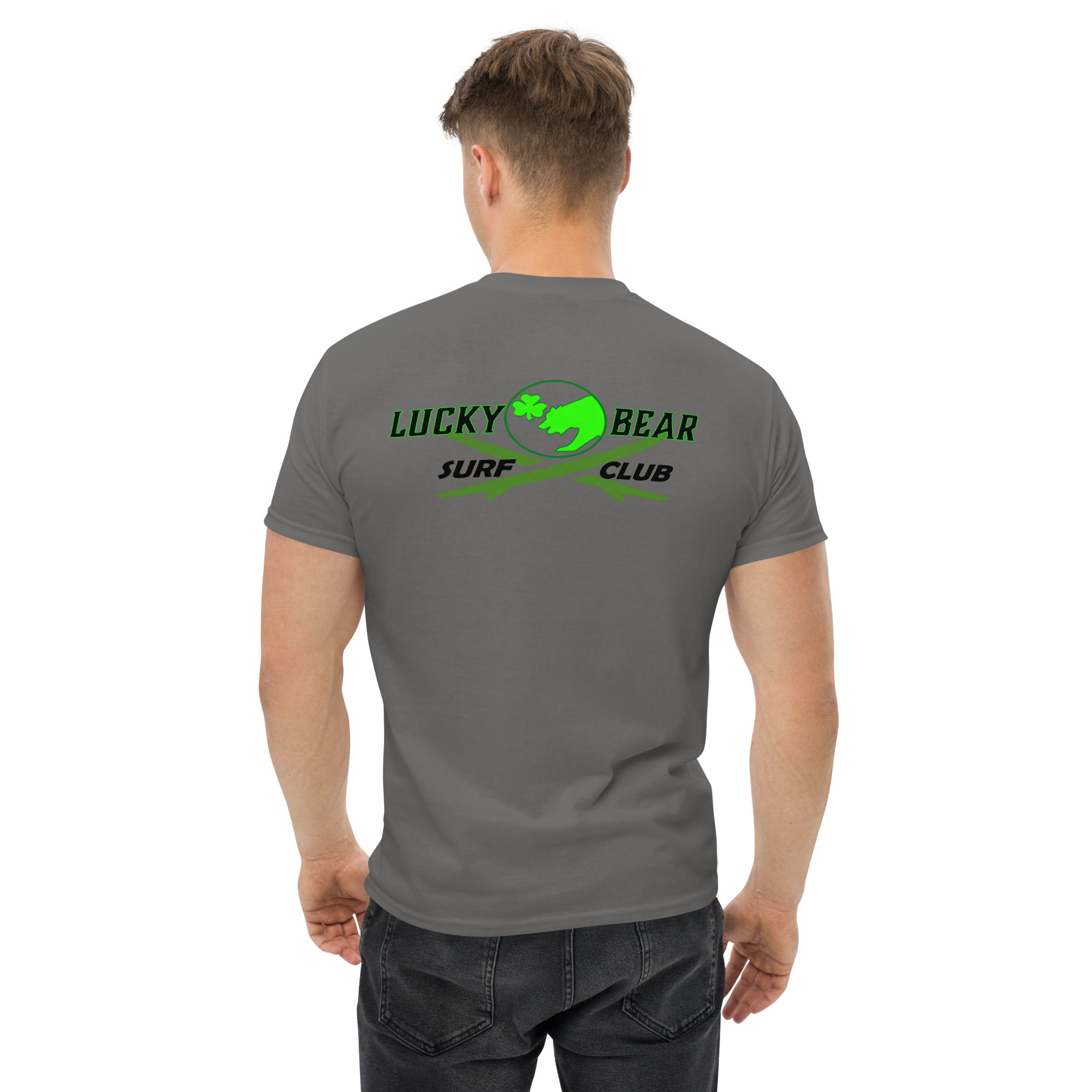
- A Surf Club Main Logo Tee at $30 for everyday wear
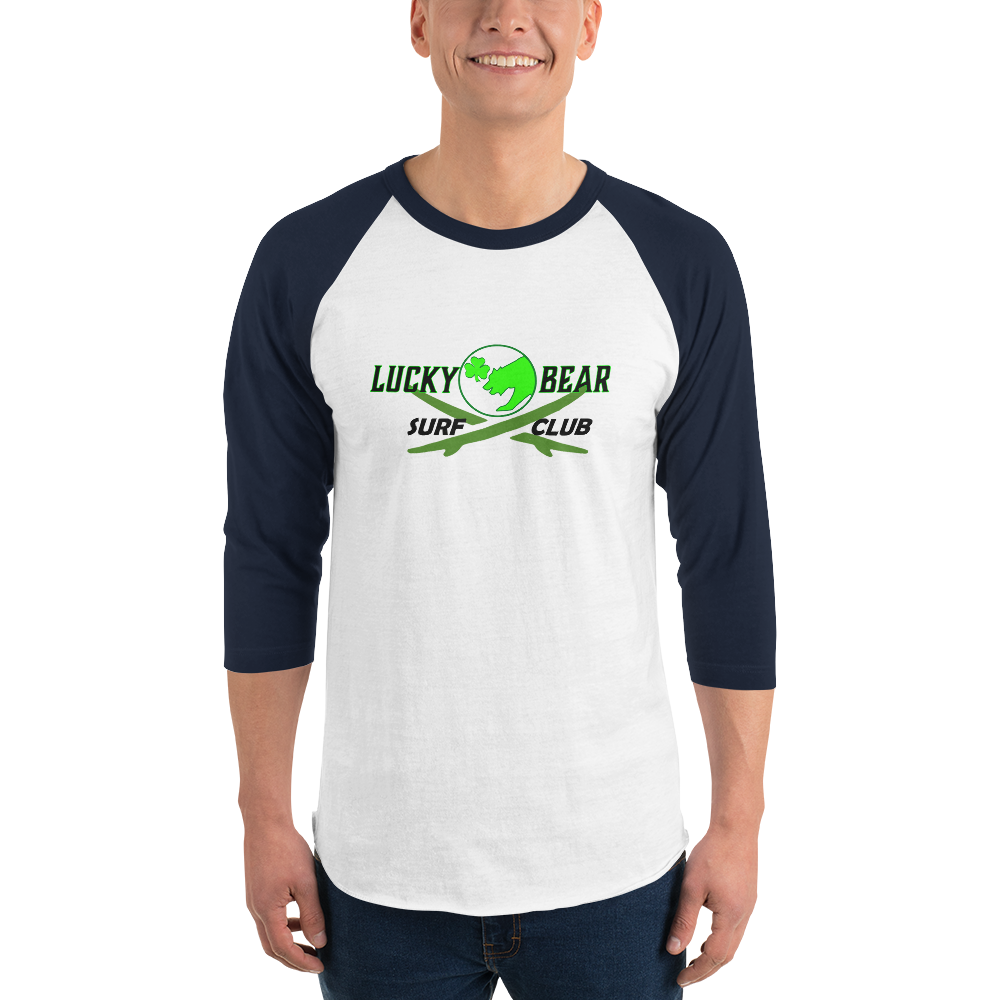
- The Lucky Bear Surf Club 3/4 sleeve Shirt at $30 for cooler evenings
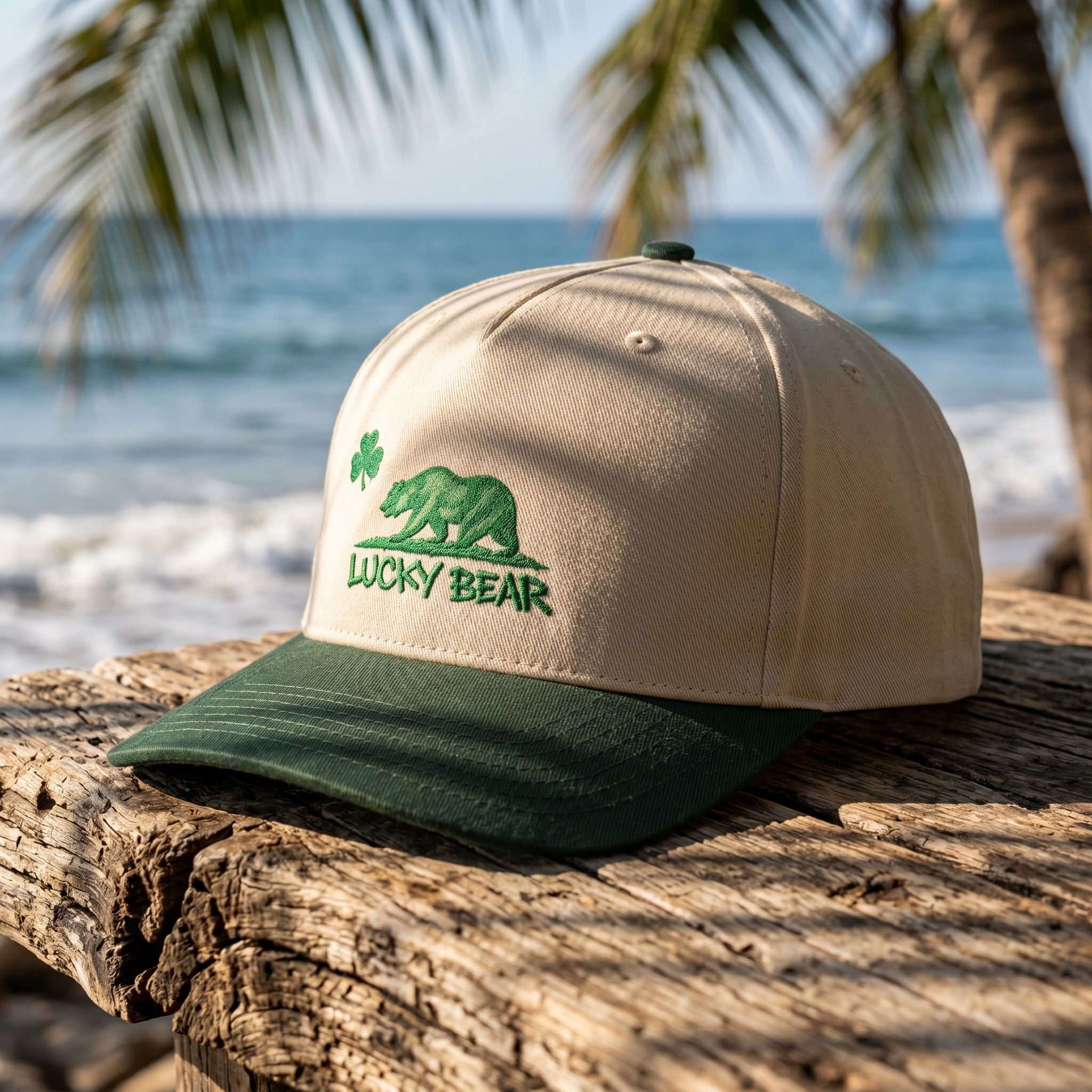
- A Lucky Republic 5 panel cap at $25 for sun coverage
- A Lucky Bear Beachtowel to round out the kit
The hardest part of building a surf wardrobe is not picking a brand; it is resisting the urge to buy everything at once. Start with the pieces you will wear weekly, then add technical gear as your sessions demand it. Lucky Bear makes that easy with made-to-order apparel, a Surf Club community, and a collection built for beaches, mountains, and everything in between. Get started with Lucky Bear and build a wardrobe that works from the sand to the street.
Frequently Asked Questions
Is Patagonia or Volcom better for surf apparel?
It depends on how you surf. Patagonia surf clothing leans toward cold-water wetsuits, long-sleeve surf shirts, and gear built for extended sessions, with higher prices to match. Volcom boardshorts and tees suit warm-water surfers who want street-ready style at a lower entry price. If you split time between the beach and the skate park, Volcom covers both. If you paddle out in 55-degree water, Patagonia's technical layers make more sense.
Which brand makes better surf shirts and boardshorts?
A practical approach is to choose surf shirts and boardshorts that fit your body and the water you surf. Try pieces on before committing to a full set.
Is Patagonia surf apparel worth the price?
If you surf weekly and want gear that survives salt, sun, and repeated washing, a durable piece can be worth more over time. For occasional surfers or teens still growing, a lower-priced option like Lucky Bear's $30 Surf Club tees is a practical choice.
Which brand has more sustainable surf apparel?
Lucky Bear takes a different route: its Surf Club items are made on demand to reduce overproduction, and 10% of Surf Club purchases go to surfing charities. Look for specific material claims rather than general green language.
How should surf apparel fit?
Rash guards and surf shirts should sit close to the skin without restricting shoulder rotation, since loose fabric traps water and causes chafing. Boardshorts should clear the knee by an inch or two and stay put when you paddle. Check size charts before ordering: Lucky Bear lists length and width in inches for each size, which helps you compare against a shirt you already own that fits well.
