

Table of Contents
- Is California Surf Wear Good for Hiking? The Honest Answer
- Fabric and Construction: What Surf Apparel Gets Right and Wrong on the Trail
- Board Shorts for Hiking: Where They Work and Where They Fail
- The Best Fabric for Hiking Shirts (and What Surf Brands Usually Use)
- What to Wear Hiking in Warm Weather: Building a Layered Kit
- Mobility, Durability, and Fit: How Surf Wear Handles Real Trail Conditions
- Weather Protection and Footwear: The Gaps Surf Wear Leaves Open
- Conclusion: When to Grab Surf Wear and When to Gear Up
- Frequently Asked Questions
Last Updated: October 9, 2026
Is California Surf Wear Good for Hiking? The Honest Answer
California surf wear is built for the ocean, not the mountain. That does not make it useless on a trail. It makes it situational.
Here is the short answer most guides skip: surf brands sell you a lifestyle, hiking brands sell you abrasion resistance.
That gap matters more than most people think.
At Lucky Bear, we make coastal apparel for people who split their time between the beach and the mountains, so we have a clear stake in this.

Fabric and Construction: What Surf Apparel Gets Right and Wrong on the Trail
Surf apparel usually nails two things: breathability and quick drying. Those matter on a hot trail.
Board shorts and rash guards are made from synthetic blends like polyester and spandex.
Where surf fabric falls short is abrasion resistance. Trail conditions grind fabric against rock, branches, and dirt.
- Good for trails: quick-dry polyester, spandex blends, mesh liners
- Weak on trails: thin single-layer fabric, loose stitching, no reinforcement panels
- Missing entirely: double knees, gusseted crotches, ripstop weaves
The construction details tell the real story. A hiking pant adds bar-tacked stress points and reinforced knees. A board short adds a drawstring.
Board Shorts for Hiking: Where They Work and Where They Fail
Board shorts are the single most common piece of surf wear people try to hike in, so it is worth being specific about which ones work and which ones do not.
Where board shorts genuinely work:
- Flat, dry, warm coastal trails under about 3 miles. A 7- to 9-inch inseam board short with a mesh liner handles a sandy bluff walk or a paved path to a tide pool without complaint. The quick-dry fabric is a real asset if you wade or get splashed.
- Swim-and-hike combos. If your route starts at a bay, crosses a cove, or ends at a swimming hole, a board short eliminates the need to change. That is a legitimate advantage hiking shorts cannot match.
- Hot, humid days with low brush. Loose fabric moves air better than a fitted trail short, and there is nothing to snag on if the trail is wide and clear.
Where board shorts fail:
- Any scramble with hands-on-rock contact. Without reinforced knees, you are kneeling bare skin on granite. A 4-inch inseam makes this worse; a 9-inch inseam only partly helps.
- Brushy or overgrown trails. Loose hems and unsecured drawstrings catch on manzanita, ceanothus, and chaparral. A fitted trail short slides past.
- Long days where you carry anything. Most board shorts have one shallow rear pocket or none at all. No secure place for a phone, keys, or a snack means everything rides in a pack, which gets old on a 10-mile day.
- Cool mornings and shaded canyons. A wet board short pulls heat off your legs fast once the sun drops behind a ridge.
The practical rule: board shorts are a reasonable choice for water-adjacent, low-intensity hikes under a few miles. The moment the route involves scrambling, brush, or a full day out, switch to trail pants or hiking shorts with real pockets, a gusseted crotch, and reinforced knees. That is not brand loyalty talking; it is the difference between fabric that survives a rock scrape and fabric that does not.
The Best Fabric for Hiking Shirts (and What Surf Brands Usually Use)
The best fabric for hiking shirts is a breathable, quick-dry synthetic with some stretch, often nylon or polyester blends.
Surf brands usually use similar base fabrics. Rash guards and surf tees are polyester and spandex, which is close. The difference shows up in the details: sun protection rating, seam placement, and odor control.
Look for these features in a hiking shirt:
- UPF rating for sun protection on exposed trails
- Mesh or vented panels for airflow in heat
- Flatlock or offset seams to prevent chafing under a pack
- Moisture-wicking and odor-resistant treatment for long days
A plain cotton tee is the wrong call. If you want one shirt that crosses over from beach to trail, pick a synthetic tee or a lightweight quarter-zip.
What to Wear Hiking in Warm Weather: Building a Layered Kit
What to wear hiking in warm weather comes down to layers you can add and remove, not one magic piece.
Start with a moisture-wicking base layer. Add a light mid-layer for wind or shade. Keep a packable shell for rain or a sudden temperature drop. Even in summer, mountain weather shifts fast.
Here is a simple warm-weather kit:
| Layer | What to Wear | Why It Works |
|---|---|---|
| Base | Synthetic tee or quarter-zip | Wicks sweat, dries fast |
| Mid | Lightweight pullover | Adds warmth without bulk |
| Shell | Packable windbreaker | Blocks wind and light rain |
| Bottom | Hiking shorts or trail pants | Pockets, mobility, coverage |
For the base and mid layers, our REI guide to layering for hiking explains the system well. The idea is to stay dry first, warm second.
A lightweight pullover is the piece most people forget. The Lucky Bear Sierras quarter-zip is moisture-wicking and odor-resistant, so it works as a base or a mid-layer depending on the day. For rain and wind, a packable shell like the Spread the Luck windbreaker adds water resistance without weight.

Mobility, Durability, and Fit: How Surf Wear Handles Real Trail Conditions
Surf wear wins on mobility and loses on durability. That is the honest split.
Everyday Sunset Lightweight quarter-zip pullover →
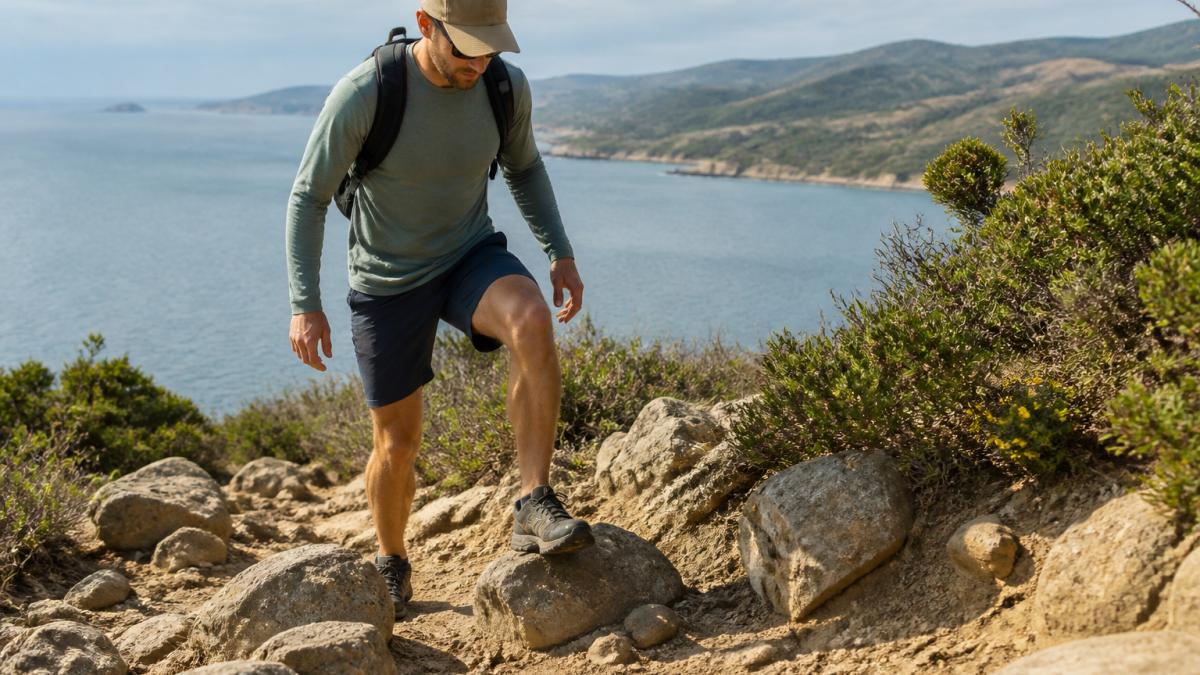
Stretch fabric lets you step high, climb over rocks, and kneel without restriction. Fit is relaxed, which helps on uneven ground. For movement alone, surf apparel feels great.
Durability is where it breaks down. Thin fabric wears through at the knees and seat. Without double knees or reinforcement, kneeling on rock scuffs the fabric fast. Loose hems snag on branches.
Fit matters too. A loose board short can catch on your knee as you climb. A fitted trail short stays put. If you plan to scramble, choose apparel with a closer fit and reinforced knees.
Weather Protection and Footwear: The Gaps Surf Wear Leaves Open
Weather protection and footwear are the two biggest gaps in a surf-only kit, and they are the two places where the wrong choice stops being a comfort issue and becomes a safety issue.
Weather protection: what surf wear actually does
Surf apparel handles sun and heat well. Rash guards and surf tees are typically rated for sun protection, and the synthetic fabric does not hold sweat the way cotton does.
What surf apparel does not do:
- Wind. A thin, smooth synthetic top has almost no wind resistance. Once you are sweaty and the wind picks up on an exposed ridge, that fabric pulls heat off your skin fast. This is the classic evaporative chilling problem, and it hits hardest on coastal ridges and shaded canyon descents.
- Rain. Most surf tops have no durable water-repellent finish and no waterproof rating. A light drizzle soaks through in minutes. A wet synthetic layer against your skin is worse than no layer at all once the temperature drops.
- Temperature swings. Coastal and mountain weather can shift 20 to 30 degrees between a sunny trailhead and a shaded summit. A single surf top cannot cover that range.
What to add instead:
- A packable windbreaker with a water-resistant coating. Look for a stated waterproof rating; 600 mm handles light rain and wind, while sustained rain needs more. The LBCA windbreaker sits in that light-rain category and packs down small enough to earn its place in your bag even on a clear day.
- A lightweight mid-layer for shade, wind, and early starts. The Lucky Bear Sierras quarter-zip works as a base or a mid-layer depending on the day and adds warmth without bulk.
- A hat and sunglasses for exposed, sunny sections. Sun protection is the one area where surf wear already does its job.
Footwear: the gap that actually matters

This is where surf wear stops being a style question and becomes a safety question.
What they lack:
- Traction. Water shoes use soft, sticky rubber optimized for wet, smooth surfaces. On loose gravel, dry dust, and angled rock, that rubber gives less grip than a hiking outsole with lugs.
- Ankle support. Most surf footwear is low-profile and flexible by design. On uneven terrain, that flexibility means your ankle does the work the shoe should be doing.
- Toe protection. A rock strike on an unprotected toe is a hike-ending injury. Hiking shoes and boots have a toe cap for exactly this reason.
- Underfoot protection. Thin soles transmit every sharp rock and root straight to your foot. On a long descent, that adds up to real pain.
What to wear instead:
- Real hiking shoes or boots with grippy tread and, for rocky or long routes, ankle support. This is the one piece of gear surf wear cannot replace.
- Wool or synthetic socks to manage moisture and reduce blister risk on long trails. Cotton socks hold sweat and are a common cause of blisters.
- A spare pair of socks in your pack for water crossings or a sudden soaking.
The honest summary: surf apparel can cover your sun and heat needs, but it leaves wind, rain, temperature swings, and footwear entirely to you. Fill those four gaps with a packable shell, a light mid-layer, real hiking shoes, and proper socks, and the rest of your surf kit can come along for the ride.
Conclusion: When to Grab Surf Wear and When to Gear Up
Surf wear works for warm, short, low-intensity hikes near water. It fails on rocky scrambles, long days, and cold or wet weather.
The rule is simple. Match the gear to the terrain, not the vibe. Grab your surf apparel for coastal paths and beach-adjacent walks.
At Lucky Bear, we build coastal apparel that crosses over from the beach to the trail.
Add to cart and build a kit that moves from the bay to the boulders.
Frequently Asked Questions
Is surf clothing comfortable for hiking?
It depends on the garment. Lightweight board shorts and polyester tops work well on warm, dry trails because they dry fast and move freely. The problems show up in fit and protection: loose surf shorts can snag on brush, and thin cotton tees soak through with sweat. For short coastal hikes, surf wear is comfortable. For long or rocky routes, dedicated hiking apparel with reinforced knees and structured footwear is the better call.
Can you hike in a T-shirt and board shorts?
Yes, for easy, warm-weather trails. A synthetic or polyester blend T-shirt paired with board shorts handles a two-to-four mile coastal or park hike fine. What you give up is abrasion resistance on granite, sun coverage on exposed ridges, and secure pockets. If the route involves scrambling over boulders or kneeling on rock, board shorts without reinforced knees will wear through faster than hiking-specific pants or shorts.
Are board shorts suitable for hiking?
Board shorts are suitable for mild, dry hikes where freedom of movement matters more than protection. Their quick-dry fabric and elastic waist work well in heat. They are not ideal for brushy trails, cold mornings, or routes with sharp rock because the loose cut catches on branches and the fabric abrades. If you want one pair for both the beach and the trail, look for board shorts with a slightly trimmer fit and at least one zippered pocket.
What fabrics are best for hiking in warm weather?
Polyester and nylon blends outperform cotton in warm weather because they wick moisture, dry fast, and resist odor. Merino wool blends work for cooler or mixed conditions. Cotton holds sweat, stays wet, and chafes on longer hikes. For surf-inspired apparel, a 100% polyester pullover with moisture-wicking and odor-resistant properties, like the Everyday Sunset Lightweight quarter-zip, layers well over a base tee and handles sun and wind without overheating.