

Last Updated: November 4, 2026
Quick Summary
Outdoor joggers with deep functional pockets should have a side pocket opening at least 4 inches wide and at least 7 inches deep, so a cased phone sits below the pocket mouth. Choose at least one zippered pocket, side-seam placement, and a hidden pocket for keys.
- Measure pocket opening width, pocket depth, and pocket mouth height before you buy.
- A modern smartphone is roughly 6 to 6.5 inches tall and about 3 inches wide.
- Front pockets bunch when you sit or climb, so side-seam pockets sit flatter.
- Keep the phone in a zippered side pocket and keys in a small hidden pocket.
- Run a movement test with your loaded phone: jog, squat, sit, and walk.
Table of Contents
- What Separates Outdoor Joggers from Casual Sweatpants
- Pocket Capacity, Depth, and Placement: What to Measure Before You Buy
- Cargo Joggers with Zipper Pockets: Security That Survives the Trail
- Men's Joggers with Zipper Pockets: Fit, Waistbands, and Cuffed Ankles
- Hiking Joggers for Men: Fabric, Breathability, and Movement
- Outdoor Joggers with Phone Pockets: Keeping Your Essentials Safe on the Move
- Choosing Your Next Pair of Outdoor Joggers
- Frequently Asked Questions
What Separates Outdoor Joggers from Casual Sweatpants
Outdoor joggers with deep functional pockets are built for movement first and lounging second. That single design priority separates them from the sweatpants you wear on the couch. At Lucky Bear, we think of it as the difference between gear that works on a trail and gear that only looks the part.
The distinction comes down to three things: pocket construction, fabric behavior, and fit. Casual sweatpants often use soft cotton blends with shallow slash pockets that dump your keys the moment you sit down. Outdoor joggers are generally designed with more secure pocket closures and stretch fabrics that hold their shape through movement.
A common mistake is buying sweatpants and expecting trail performance. They pill, sag at the knee, and lose pocket contents on descents. If your joggers are meant for hiking, walking, or running, check the pocket depth and closure before anything else.
Pocket Capacity, Depth, and Placement: What to Measure Before You Buy
Pocket depth is the number most shoppers never check, and it is the one that decides whether your phone survives a hike. Instead of trusting the word "deep," measure three things with a tape or a ruler before you commit: pocket opening width, pocket depth from the seam to the bottom of the bag, and the height of the pocket mouth relative to your phone.
A modern smartphone is roughly 6 to 6.5 inches tall and about 3 inches wide, depending on the model and case. Use those figures as your baseline. A functional side pocket should have an opening at least 4 inches wide so your hand and a cased phone slide in without scraping, and a depth of at least 7 inches so the top edge of the phone sits below the pocket mouth when you stand. If the phone's top edge peeks above the opening, the pocket is too shallow for running or hiking, no matter how it feels in the store.
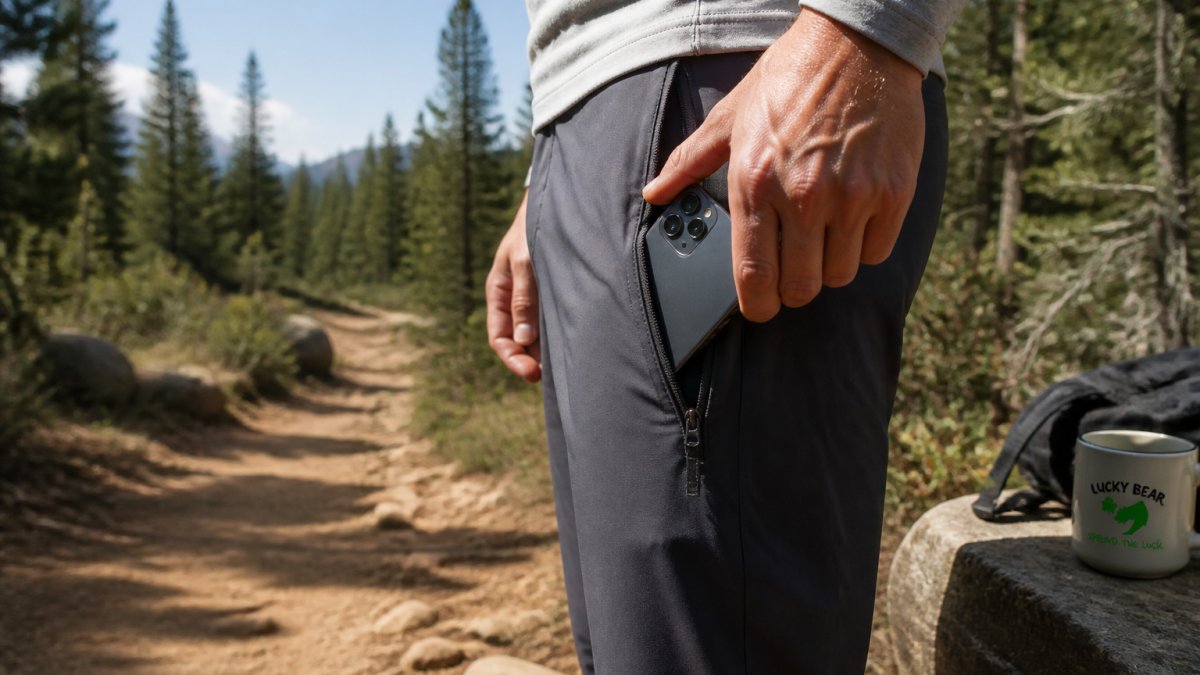
Here is a simple checklist we recommend running through before you buy:
- Pocket opening at least 4 inches wide for a hand and a cased phone
- Pocket depth at least 7 inches, or phone height plus a thumb's width
- Zipper or secure closure on at least one pocket
- Pocket placement on the side seam, not the front, for seated comfort
- A hidden pocket for keys or cards if you carry both
Placement matters as much as size. Front pockets bunch when you sit or climb. Side pockets sit flatter against the leg and stay out of the way of a hip belt or backpack strap. Back pockets are fine for a card but a poor choice for a phone during activity. A common pattern is to keep the phone in a zippered side pocket and keys in a small hidden pocket so the two never scratch against each other.
Watch out: a pocket can be deep and still fail. If the opening is wide and the closure is missing, a deep pocket becomes a chute that dumps contents on a descent. Depth without security is not capacity you can use.
Here are the pocket measurements and placement rules to check before you buy.
| Item | Value | Note |
|---|---|---|
| Smartphone height | Roughly 6 to 6.5 inches tall | Depends on model and case |
| Smartphone width | About 3 inches wide | Depends on model and case |
| Pocket opening width | At least 4 inches wide | Fits hand and cased phone |
| Pocket depth | At least 7 inches | Or phone height plus a thumb's width |
| Closure | Zipper or secure closure | On at least one pocket |
| Placement | Side seam, not front | For seated comfort |
| Hidden pocket | For keys or cards | If you carry both |
Cargo Joggers with Zipper Pockets: Security That Survives the Trail
Zippered pockets are the single most useful feature on cargo joggers with zipper pockets, because they turn a loose pocket into a secure one. A zipper keeps a phone, keys, or a card from sliding out when you bend, run, or scramble over rocks. For anyone who has lost a phone on a descent, this is not a small detail.
Watch out: not all zippers are equal. Cheap zippers can catch on fabric and fail at the pull. A zipper that opens on its own is worse than no zipper at all.
Cargo joggers add extra pocket volume on the thigh, which suits hikers carrying a map, snack, or small essentials. The trade-off is bulk. A loaded cargo pocket swings against the leg during running, so keep heavy items in a zippered side pocket and reserve cargo pockets for light gear.
Men's Joggers with Zipper Pockets: Fit, Waistbands, and Cuffed Ankles
Fit decides whether secure pockets actually stay secure. A waistband that slips turns every step into a pocket-shift, and a loose leg catches on brush. Men's joggers with zipper pockets work best when the waistband holds without a belt and the ankle is cuffed or tapered to keep fabric out of your stride. For a deeper look at men's joggers with deep pockets, the buying guide covers fit, waistbands, and cuffed ankles in detail.
An adjustable waist with an elastic waistband and drawcord gives you a locked-in fit without digging in. Cuffed ankles keep the hem from dragging and stop cold air and debris from riding up the leg. For hiking and walking, a slightly tapered leg moves better than a wide, baggy cut.
In practice, the fit you choose depends on layering. If you wear joggers over a base layer in cooler months, size for the layer, not the bare leg. If you wear them alone in heat, a closer fit reduces fabric flapping and keeps pockets flat against the body.
Ocean Blue Retro Sunset Crossover leggings with pockets →
Hiking Joggers for Men: Fabric, Breathability, and Movement
Fabric is where outdoor joggers earn their place in your bag. Breathable, lightweight fabric helps move sweat away from the skin on a climb, and quick-dry fabric can make a stream crossing or an unexpected shower less of a problem.
Stretch is the feature to prioritize for hiking. It lets the fabric move with your stride and your squat over a rock without pulling at the seams.
A common mistake is choosing the softest fabric on the rack. The softest cotton blend feels great in the store and sags on the trail.
Outdoor Joggers with Phone Pockets: Keeping Your Essentials Safe on the Move
Phone storage is the make-or-break test for outdoor joggers with phone pockets, and the test is not how the pocket feels standing still. It is what happens to the phone when you run, bend, sit, and climb. A pocket that holds a phone flat against the thigh at rest can still let it bounce, slide, or work its way toward the opening once you move.
Run a simple movement test before you commit to a pair. Load the pocket with your actual phone and keys, then do four things in sequence: jog in place for 30 seconds, do five deep squats, sit on a low step and stand back up, and walk a few steps with a loaded backpack on. After each, check whether the phone has shifted toward the pocket mouth, whether the fabric sags on that side, and whether the phone presses into your hip or thigh. If the phone migrates upward or the pocket sags low enough to swing, the design is wrong for running and hiking.
Pocket type changes the result. Open slash pockets are the least secure during movement because nothing resists the phone sliding out when you bend forward. Zippered side pockets tend to be the most reliable for running because the closure helps hold a phone in place. Hidden pockets are often best reserved for keys and cards rather than a phone.
For a concrete option, our May Gray Retro Sunset Crossover leggings with pockets and Ocean Blue Retro Sunset Crossover leggings with pockets each feature one pocket on each side, a high-waisted fit, and a soft, stretchy fabric with a mild-compression feel. Both are made with 74% recycled polyester and 26% elastane and carry UPF 50+ protection. The side pockets help keep essentials close.


Key storage deserves its own thought. Keeping keys and phone in separate pockets can help avoid scratching a phone screen.
Watch out: a phone that fits when you stand can still fail the sit test. Sitting compresses the thigh and pushes a side pocket upward, so check seated comfort with the phone loaded before you decide the pocket works.
Choosing Your Next Pair of Outdoor Joggers
Start with the activity, then match the pocket layout to it. Running and jogging favor a close fit with one zippered phone pocket and minimal cargo bulk. Hiking and walking reward deeper side pockets, a hidden key pocket, and stretch fabric that handles uneven ground.
Try each pair on with your phone and keys in the pockets, then squat, lunge, and walk a few steps. If anything shifts or digs, the fit is wrong for you.
Watch out for joggers sold as "outdoor" that use thin, shallow pockets and no closure. They look right and fail in the field. Prioritize pocket security, breathable fabric, and a waistband that holds, and you will get years of use from one pair.
Frequently Asked Questions
What should you look for in outdoor joggers with deep pockets?
Start with pocket depth and closure. A front pocket should hold a phone without the top edge riding above the pocket opening when you sit or squat. Look for zippered or secure pockets on at least one side, a stretch fabric, and a waistband that stays put without a drawcord digging in. Breathable, moisture-wicking material matters more than thickness, and cuffed ankles keep the hem clear of your shoes on uneven ground.
Are cargo joggers with zipper pockets good for hiking?
They work well on day hikes and groomed trails. Zippered cargo pockets keep keys, snacks, and a phone from bouncing out on descents, and the extra storage means you can leave a small pack at home. The trade-off is weight: cargo pockets add fabric and can feel bulky under a hip belt. For long climbs or heavy loads, a lighter pair with two secure front pockets usually feels better.
Which men's joggers have pockets deep enough for a phone?
Check the listed pocket depth before ordering, and read reviews that mention phone size. A pocket around 6 to 7 inches deep holds most modern phones without the top third poking out. Zippered side pockets are the safest bet because the closure stops the phone from sliding forward when you sit. Lucky Bear's crossover leggings, for example, list one pocket on each side and a high-waisted fit.
How should hiking joggers fit?
They should feel snug at the waist and ankle but loose through the thigh and knee. You want enough room to squat, step over a log, and climb without the fabric pulling tight across the hips. An elastic waistband with an adjustable drawcord handles changes in layering. If you are between sizes, size up: a slightly roomier leg moves better on the trail, and cuffed ankles stop the extra length from dragging.
Picking the right pair comes down to pockets that hold, fabric that breathes, and a fit that moves with you. Lucky Bear builds California-inspired apparel for exactly that mix of trail and town, from our coastal collections to everyday athletic wear. Explore the Lucky Bear lineup and find gear made for the luck of living life to the fullest.
