

Table of Contents
- Why Deep Pockets Change How You Wear Men's Joggers
- Pocket Depth, Security, and Anti-Sag Technology Compared
- Men's Joggers With Zipper Pockets: When the Extra Hardware Pays Off
- Fabric Weight, GSM, and Stitching: What Separates Durable Athletic Joggers for Men
- Sizing and Fit: Tapered, Relaxed, and Size-Inclusive Options
- How to Style Joggers for Men: Gym, Trail, and Everyday
- Care, Maintenance, and Mistakes That Ruin Deep Pockets
- Conclusion: Picking Joggers That Actually Carry Your Gear
- Frequently Asked Questions
Last Updated: October 3, 2026
Why Deep Pockets Change How You Wear Men's Joggers
Deep pockets turn men's joggers with deep pockets from loungewear into gear you can live in.
A shallow pocket forces a choice: carry your phone and risk it slipping out, or leave it behind. Deep side-entry pockets end that trade-off, letting you move from gym to coffee shop to campsite without a bag.
Pocket depth and security decide whether a pair of joggers works or just looks the part.
Pocket Depth, Security, and Anti-Sag Technology Compared
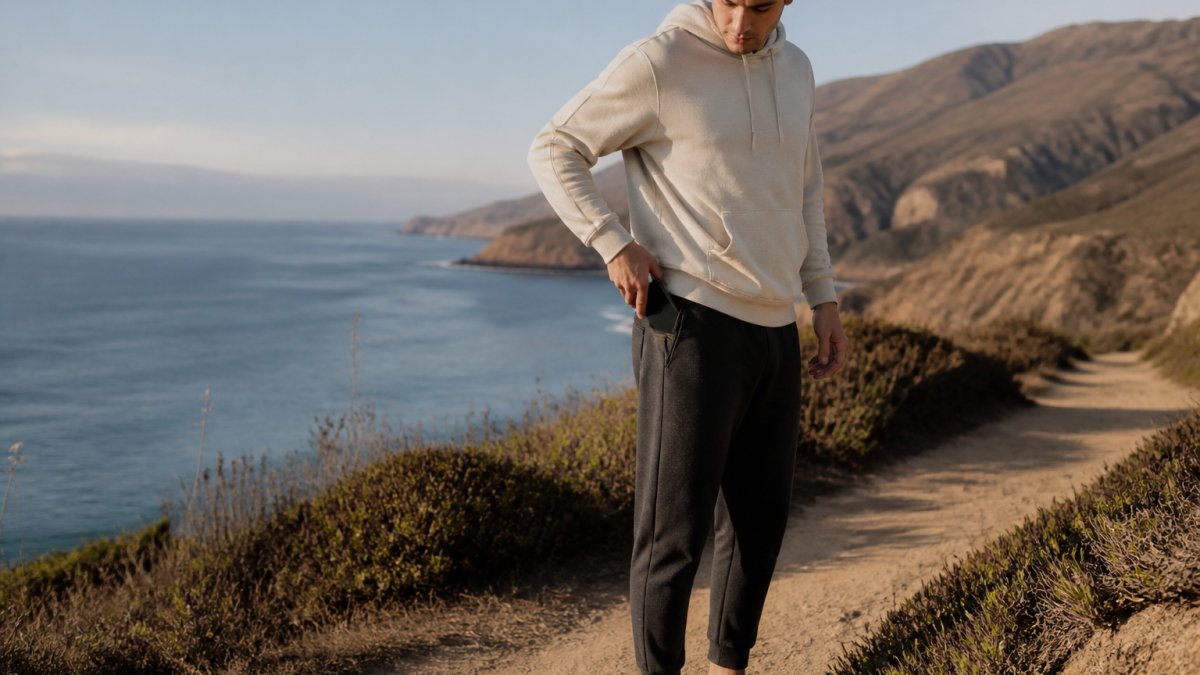
Pocket depth is the most useful spec to check, and the one most product pages leave out. A functional side-entry pocket runs roughly 15-18 centimeters deep, holding a standard phone fully below the opening.
Three design details separate a pocket that works from one that sags:
- Pocket depth: Deeper is better, up to a point. Past about 20 centimeters, fabric bunches.
- Anti-sag reinforcement: A second stitch line or bar tack at the pocket mouth stops the fabric from stretching out over time.
- Pocket bag material: A lighter lining inside the pocket adds less weight than a double layer of the main fabric.
A common mistake is judging pockets on the hanger. They look identical; the difference shows up after a week of use.
Zipper vs. Open Pocket Utility
Zippered pockets win for high-motion use; open pockets win for anything you reach for constantly. A zipper adds a little weight and bulk at the seam, but nothing leaves the pocket unless you unzip it, worth the trade for running, skating, or a crowded train.
Open side-entry pockets are faster to use and feel cleaner against the hip, suiting lounging, errands, and casual wear. The catch: an open pocket on loose, lightweight fabric will spill a phone when you sit.
Our rule of thumb: zip the side you carry valuables in, leave the other side open.
How to Test Pocket Security Before You Commit
Test the pocket in the store, or in your first five minutes at home:
- Drop your actual phone in. It should sit fully below the pocket opening.
- Jog in place for 30 seconds. The phone should not bounce against your thigh.
- Bend forward and touch your toes. Nothing should slide out.
- Pull the pocket mouth sideways. Good stitching won't gap or stretch.
If a pair fails step two or three, return it. No styling fixes a pocket that dumps your keys on the sidewalk.
Men's Joggers With Zipper Pockets: When the Extra Hardware Pays Off
Zippered pockets earn their keep in high-motion activity, crowded spaces, and travel.
The hardware matters. A quality zipper runs smoothly, sits flat against the seam, and has a small pull tab that won't snag.
Most buyers assume zippered means secure. A zipper on a shallow pocket still lets a phone ride high and press into your hip, depth and zipper work together.
For everyday wear, a single zippered back pocket plus open side pockets covers most needs.
Fabric Weight, GSM, and Stitching: What Separates Durable Athletic Joggers for Men
Fabric weight, measured in GSM (grams per square meter), tells you how a jogger drapes, breathes, and holds shape. Lightweight knits under about 200 GSM feel cool but stretch out faster; midweight fabrics around 250-300 GSM hold pockets better and work across seasons.
Durable athletic joggers for men share a few traits:
- Dense knit: Tight loops resist pilling and hold pocket shape.
- Reinforced stitching: Double-stitched seams at stress points, especially the pocket mouth and gusseted crotch.
- Ribbed ankle cuffs: Cuffs that recover their shape instead of going floppy.
Stitching quality is the tell. Turn the joggers inside out and look for clean, dense seams without loose threads. A bar tack at the pocket corner means the brand expected that spot to take stress.
Cotton-Poly Blends vs. Performance Knits
Cotton-poly blends feel soft and hold a casual look: cotton adds breathability and a matte finish, polyester adds shape retention and faster drying.
Performance knits lean on synthetics, often with spandex. They wick moisture, dry fast, and spring back after a workout, though some have a slicker hand that reads more gym than street.
Neither wins outright. Blends suit everyday comfort and lounging. Performance knits suit training and hot weather.
Sizing and Fit: Tapered, Relaxed, and Size-Inclusive Options
Fit decides whether deep pockets stay functional. A tapered leg narrows toward the ankle, reducing flap and bounce; a relaxed fit feels roomier but lets a loaded pocket swing. Neither is wrong, the fit just has to match how you carry.
Measure before you order:
- Waist: Measure at your natural waist, not your hip. An elastic waistband with a drawstring gives a few centimeters of adjustment either way.
- Inseam: Measure from crotch to ankle bone. Joggers usually hit at or just above the ankle.
- Thigh: A snug thigh pulls pockets tight and limits stride. Leave a little room.
If you're between sizes, size up for a relaxed fit and down for an athletic fit; the drawstring covers the difference at the waist.
Does Pocket Depth Scale With Size?
Almost no product page answers this, and it decides whether a pair works for you. Pocket depth does not always scale with the waistband. Some brands grade the pattern proportionally, so a larger size gets a larger pocket bag.
A practical way to check before you buy:
- Ask for the pocket depth spec in your size. If a brand publishes one number, assume it applies to the middle of the run.
- Compare the pocket mouth to your hand. Lay your hand flat across the opening. If your hand is wider, the pocket will gap when loaded, however deep the bag is.
- Check the drop. Drop your phone in and stand naturally. The top of the phone should sit at least a finger's width below the pocket mouth. If it peeks above the seam, the pocket is too shallow for your frame.
- Sit down. The test most people skip. A pocket that passes the standing check can still dump a phone forward when you sit, because the hip crease pushes the mouth open.
Brands that get this right widen the pocket bag and lower the pocket mouth as sizes increase, so the geometry stays consistent from a small to a 3XL.
Tapered vs. Relaxed: Which Holds a Loaded Pocket Better
Relaxed legs win for comfort and layering, but a loose leg lets a loaded pocket swing side to side, and the momentum pulls on the pocket mouth with every step.
A middle path many buyers land on: a tapered leg with a bit of stretch through the thigh. You get the pocket stability of a taper without the restriction of a slim cut.
How to Style Joggers for Men: Gym, Trail, and Everyday
Styling joggers is easy; styling them so the pockets work for what you're doing is the part most guides skip.
Gym: Pair with a fitted tee and training shoes, two tones at most.
Trail: Go with a moisture-wicking top and trail shoes. Tapered legs and ribbed cuffs keep fabric clear of your stride.
Everyday: A relaxed fit with a hoodie and clean sneakers works for errands and coffee.
The trick most people miss is proportion.
Security Testing: Does the Pocket Actually Hold Up in Motion?
Most guides say deep pockets are secure; almost none tell you how to prove it.
The four-move test:
- Stand and drop. Put your phone in the pocket and stand naturally. The top should sit at least a finger's width below the pocket mouth. If it peeks above the seam, the pocket is too shallow for your frame.
- Jog in place for 30 seconds. The phone should not bounce against your thigh or climb toward the opening. Bounce means the pocket bag is too loose or the fabric too light.
- Bend forward and touch your toes. Nothing should slide out. This exposes an open pocket on a slick performance knit.
- Sit down and stand up twice. A pocket that passes the standing check can still dump a phone forward when you sit, because the hip crease pushes the mouth open. If the phone rides up to the seam, the pocket fails for daily wear.
Run the same test with your keys. They're small, heavy, and find the gap in a pocket mouth faster than a phone does.
What the test tells you:
- Fails step 2 or 3: The pocket is too shallow, the fabric too light, or the mouth too wide. Return it.
- Passes 1-3 but fails step 4: The pocket works for standing and walking but not sitting. Fine for a run, wrong for a commute.
- Passes all four: The pocket is built for real carry. Keep this pair.
A zipper changes the math: a zippered pocket that passes step 1 is effectively secure through all four moves, because nothing leaves unless you unzip it.
Care, Maintenance, and Mistakes That Ruin Deep Pockets
Washing mistakes, not wear, kill pockets first. Heat is the main culprit. Hot water and high dryer heat shrink elastic, break down spandex, and loosen stitching at the pocket mouth.
Wash cold, inside out, and skip the dryer when you can; hang or lay flat to dry.
Three mistakes to avoid:
- Overloading one pocket. A phone, keys, and wallet in one side stretches that pocket permanently. Split the load.
- Fabric softener. It coats synthetic fibers and reduces moisture-wicking. Skip it on performance knits.
- Bleach and harsh detergents. They weaken elastic and fade color. A mild detergent does the job.
Turn pockets inside out before washing so lint and grit don't collect in the corners.
Conclusion: Picking Joggers That Actually Carry Your Gear
The hardest part of buying men's joggers with deep pockets is that the specs rarely appear on the label. You have to check depth, stitching, fabric weight, and fit yourself.
That's the gap we build for at Lucky Bear. Our California-inspired joggers pair deep side-entry pockets with reinforced stitching and a tapered leg, so your phone stays put from trail to coffee shop.
Add to cart and find your fit.
Frequently Asked Questions
What are joggers with deep pockets called?
They are usually sold as utility joggers, tech joggers, or performance joggers. The label matters less than the specs: look for a pocket depth of at least 6 inches, a zippered or reinforced opening, and an elastic waistband with a drawstring closure. Deep side-entry pockets paired with a gusseted crotch keep the fit secure when you load them up with a phone, keys, and wallet.
Are joggers with zip pockets better for workouts?
For running, lifting, or skateboarding, zippered pockets are the safer choice. A zipper keeps your phone and keys from bouncing out during movement, and it stops fabric from snagging on gym equipment. Open deep pockets work fine for casual loungewear, but if you plan to move fast, the extra hardware on men's joggers with zipper pockets is worth it.
Should men over 40 wear joggers?
Yes, fit matters more than age. A relaxed or athletic fit in a heavyweight fabric with ribbed ankle cuffs reads as polished rather than sloppy. Skip ultra-skinny cuts and thin, shiny fabrics. Choose a tapered leg with a clean silhouette, pair it with a plain tee or hoodie, and joggers work for hiking, errands, and casual weekends at any age.
What are thick joggers called?
Thick joggers are typically described by their GSM weight, the grams per square meter of the fabric. Anything above roughly 300 GSM counts as heavyweight. Fleece-lined and brushed-back styles fall into this category and hold their shape better, resist see-through fabric, and keep pockets from sagging under load. Heavier fabric also tends to hide stitching flaws less, so check seams carefully.